25 Easiest Countries Americans Can Move To in 2026
Moving abroad used to feel like something only retirees or people with zero responsibilities actually did. But in 2026, that’s changed a lot.
More countries are rolling out the welcome mat for Americans right now. Easier visas, digital nomad programs, and lower costs of living are making it more realistic than ever to really do it.

Whether you’re after lower costs, better healthcare, a change of scenery, or something else, there are a lot of countries out there that want you there and make it pretty easy to show up.
We rounded up 25 countries where Americans are moving in 2026. By the time you get to number 1, who knows.. you might start Googling flights!
Why Americans Are Moving Abroad
If 2020 gave everyone the travel bug, 2026 is the year people are doing something about it.
For a lot of Americans, it comes down to money: housing is expensive, everything costs more, and moving abroad can mean living a life that feels out of reach at home.
Remote work changed everything too. If you can do your job from a laptop, you can do it from anywhere. And more and more countries know that, which is why digital nomad visas are popping up everywhere right now.

Healthcare is a big one, too. Countries like Costa Rica, Spain, and Portugal have affordable and high-quality medical care that makes the American system look pretty wild by comparison.
And then there’s everything else including safety, being able to walk places, a slower pace, real culture, etc. etc. The kind of life a lot of Americans are dreaming about.
25 Easiest Countries Americans Can Move To in 2026
25. New Zealand
New Zealand is one of our favorite countries, and it keeps showing up near the top of every “best places to live” list (though it’s not hard to see why).
Getting there as an American takes some effort. The Skilled Migrant Visa is the most common route, and there are work visas and retirement options, too. It’s competitive, but compared to a lot of other developed countries, it’s pretty doable.

The landscapes are incredible. Mountains, fjords, beaches, hiking everywhere you look. The culture is relaxed and people are genuinely friendly. English is the main language, so you’re not starting from zero either.
New Zealand is not cheap. Costs are closer to a mid-sized American city than anything you might find in Southeast Asia. Groceries run a little higher, but healthcare is really good and won’t bankrupt you, which already puts it ahead of home.
24. France
France has been on Americans’ relocation lists forever, and it’s more doable than most people typically think. The Long-Stay Visa gets you in for a year, and if you keep renewing, permanent residency is on the table after five years.

Paris is expensive, there’s no getting around it. One-bedrooms run $1,800 to $2,200 a month. But move to Lyon, Bordeaux, or Montpellier and the numbers look a lot different.
And let’s be honest.. the lifestyle sells itself. Cafés, beaches, the Alps, wine country. And don’t get me started on healthcare. It’s excellent and costs a fraction of what you’d pay at home.
23. Italy
Italy has been pulling Americans in for centuries, and the Elective Residency Visa makes it easier than ever for the right person. You need to show steady income or savings, and it won’t let you work locally, but for retirees or anyone living off passive income, it’s a really solid option.
Costs depend a lot on where you decide to live. Rome, Milan, and Florence aren’t cheap (you probably could’ve guessed that), with one-bedrooms running $1,200 to $1,500 a month. But head to a smaller town and you can cut that in half easily.

The food alone is worth it. But add the coastlines, the Alps, the art, the piazzas, and Italy is a dream living location.
Pro Tip: If you’re serious about affordability, look into southern Italy. Towns in Calabria, Basilicata, and Sicily often have half the rental prices of northern cities, plus fewer crowds.
22. Greece
Greece keeps climbing the list for Americans, and there are two main reasons for that. First is the Golden Visa Program, which gets you residency through property investment, and the Digital Nomad Visa, which is built for remote workers.
It’s also cheaper than most of Western Europe. Athens runs around $800 to $1,000 a month for a one-bedroom. Go to a smaller town, head to Thessaloniki, or one of the quieter islands, and the prices drop.

Lifestyle perks are pretty obvious. We’re talking stunning islands, ancient history, Mediterranean cuisine, endless sunshine, etc. English is widely spoken in tourist areas, and the culture is warm and family-oriented.
21. Malta
Malta keeps coming up as one of the easier European countries for Americans to go. The Global Residence Program and Digital Nomad Visa are both solid options, and English is an official language, so there’s no language barrier to navigate.
Cost-wise, it’s decently reasonable. A one-bedroom in Valletta or Sliema runs about $1,000 to $1,200 a month. Groceries and utilities run about 20 to 25% cheaper than at home, and healthcare is good.

Year-round sunshine and a location that puts Italy, Greece, and North Africa within a short flight, Malta should be a destination you consider if you decide to move abroad.
The expat community is big and welcoming too, which makes settling in a lot easier than you’d expect in a country this small.
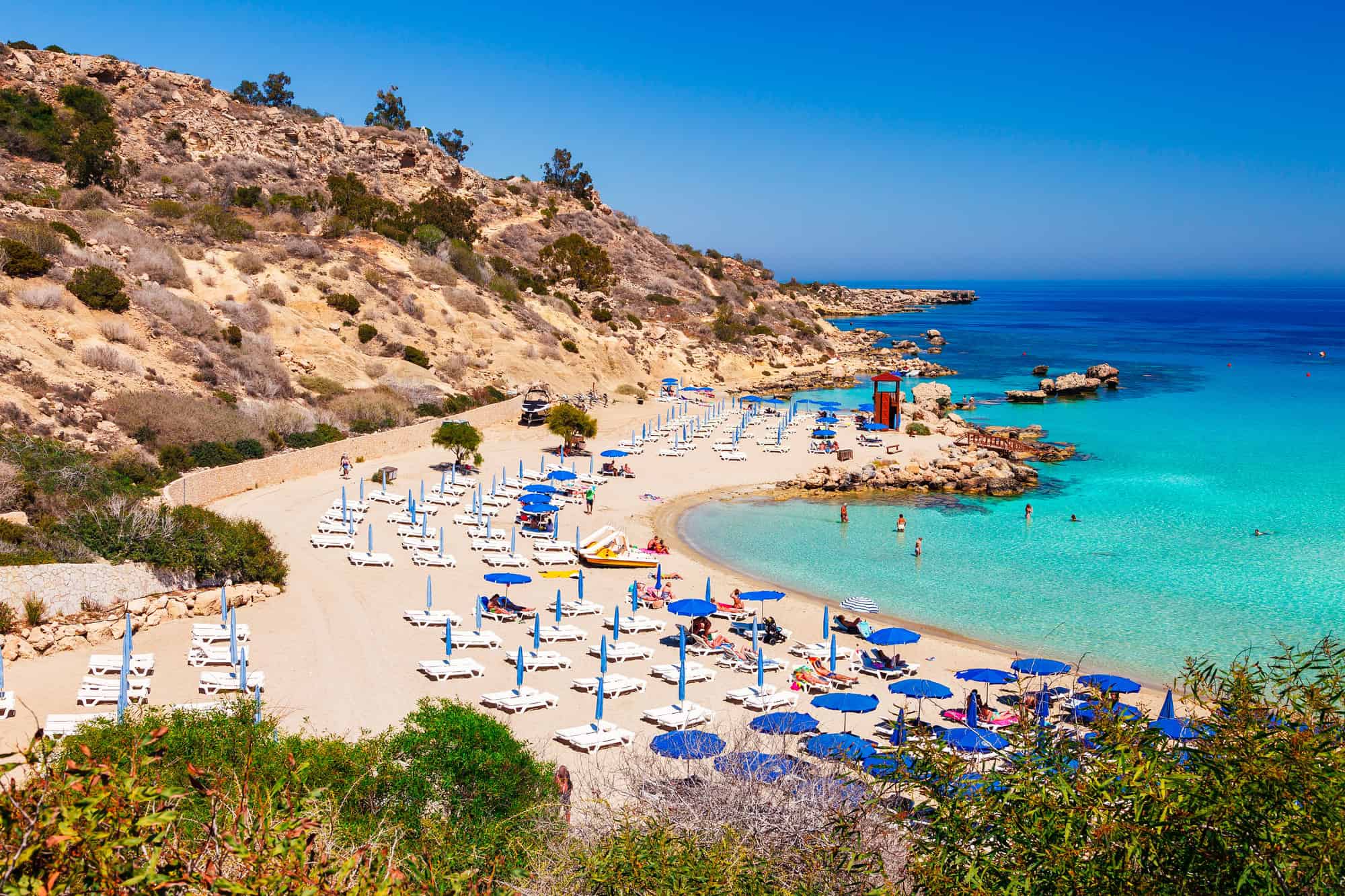
20. Cyprus
Cyprus doesn’t get talked about nearly enough,
There are a few visa options, but the Category F visa is the easiest route for most people. It’s geared toward retirees and anyone with a guaranteed income, and the bar is pretty low. Like around €10,000 a year is all you need to show.
The Digital Nomad Visa is the other option, and built for people working remotely for companies or clients outside Cyprus. You need to show at least €3,500 a month in income, and that’s pretty much it.
Cost of living is reasonable. Eating out won’t break the bank, groceries run about 25% cheaper than in the U.S., and healthcare is solid with both public and private options once you’re a resident.
With over 300 days of sunshine and being just a short flight from both Europe and the Middle East, Cyprus sits at a pretty unique crossroads.
This island has Greek and Turkish influences, including in the food, the architecture, and the culture.
Pro Tip: While Limassol is the business hub, it’s pricey. For better value and an expat community, look into Paphos.
19. Spain
The lifestyle, the weather, the food, and the pace of life in Spain is hard to argue with.
The most popular visa for Americans is the Non-Lucrative Visa. You don’t work locally, but if you can show around $2,500 a month in passive income or savings, you’re in. The Digital Nomad Visa is another option and it’s been picking up steam lately.

Madrid and Barcelona are expensive, but Spain is a big country. In Valencia or Málaga, a one-bedroom runs $800 to $1,000 a month, and groceries are about 30% cheaper than at home.
The lifestyle is an obvious plus. You’ll be able to enjoy tapas, a slower pace of life, centuries of history, and cheap flights to everywhere else in Europe. It’s a hard combination to beat.
18. Portugal
Portugal is a hot spot for moving abroad right now.
The Digital Nomad Visa makes it pretty straightforward for remote workers, and if you stick around, permanent residency is possible after five years.
Lisbon runs around $1,200 a month for a one-bedroom. In Porto or smaller towns, you’re closer to $800. Still lower than most of Western Europe, and a lot lower than most U.S. cities.

Food is cheap and you don’t need a car to get around. Healthcare is decent, especially in larger cities.
The weather is mild and the coastlines are beautiful. English gets you pretty far, especially in Lisbon and Porto.
17. Croatia
Croatia has gone from under the radar to one of the more talked-about spots for Americans moving to Europe. The Digital Nomad Visa launched in 2021 and lets you stay up to 18 months as long as you have remote income coming in.
The coastline is stunning and there are over a thousand islands to explore. Medieval towns, clear water, a pace of life that’s hard to argue with.. you get the picture.
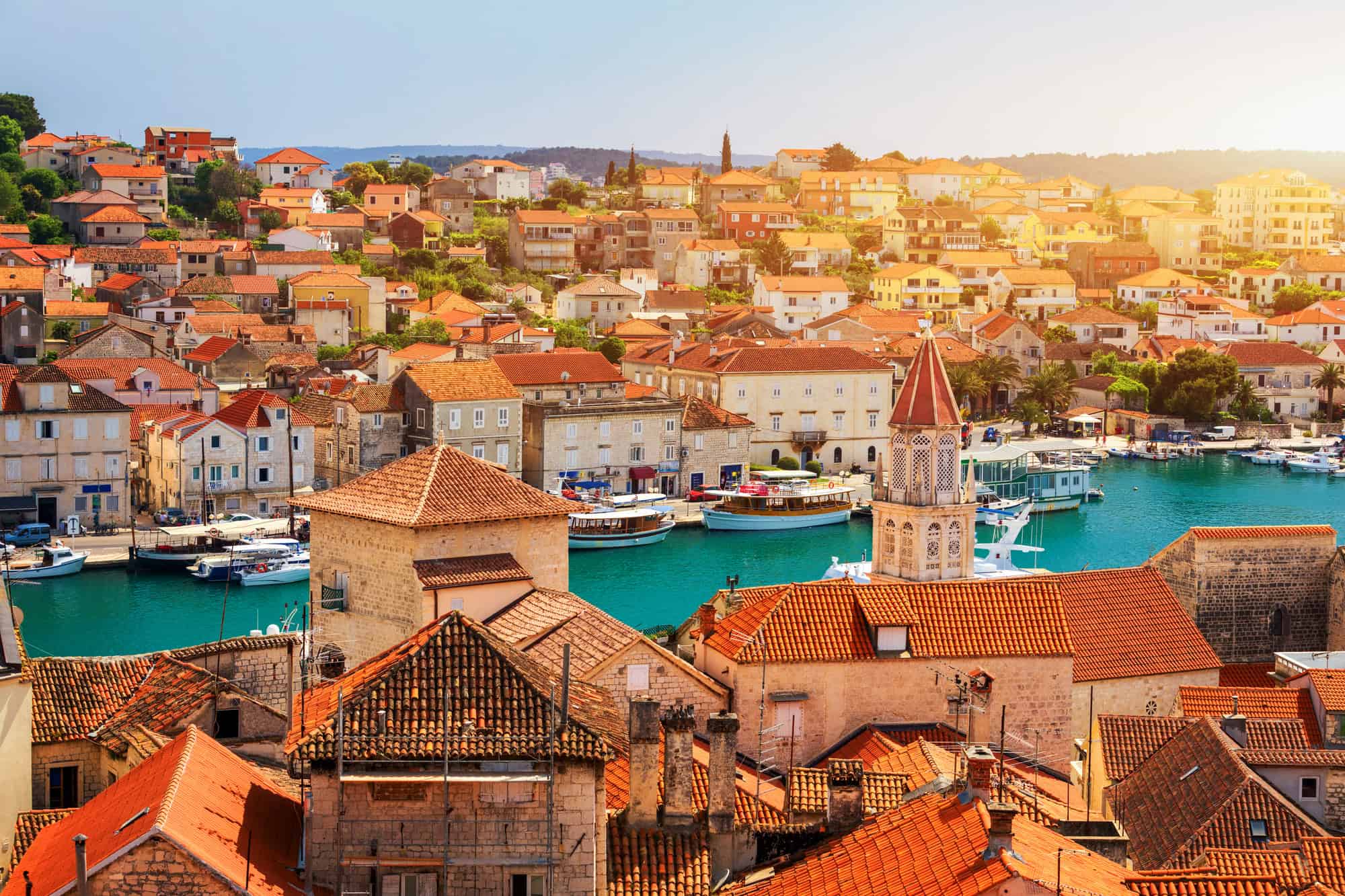
Costs are reasonable. Groceries and utilities run about 25 to 30% cheaper than in the U.S., and eating out won’t hurt your wallet (huge perk). Healthcare is good and a fraction of what you’d pay at home.
Pro Tip: Dubrovnik is stunning, but it’s also expensive and touristy. For better value and a year-round community, consider Split or Zadar, which offer beautiful coastlines and strong expat scenes at lower prices.
16. Ireland

Ireland is one of the easiest countries for Americans to settle in, especially if you have Irish ancestry. If you can prove an Irish-born grandparent, you can apply for citizenship by descent.
While Ireland isn’t the cheapest country on this list, the cultural familiarity and English-speaking environment make it appealing.
Dublin rents are high, but smaller cities like Cork, Limerick, or Galway are more affordable. A one-bedroom in Galway might run $1,000–$1,200 per month, with utilities and groceries about 10–15-20% cheaper than in U.S. cities like Boston or New York.
Ireland has incredible coastal drives and charming villages. You’ll also find a pub culture that lives up to everything you’ve heard. And being in Europe means cheap flights pretty much anywhere on weekends.
15. Uruguay
Uruguay flies under the radar, but it should be on more people’s lists. The residency process is one of the more straightforward ones in South America.
As an American, you can apply with proof of income and a clean record. Citizenship is possible after just five years for singles, and 3 years for married couples. Uruguay also allows dual nationality, which makes the process even easier.

The cost of living is moderate compared to the U.S.
A one-bedroom apartment in Montevideo averages $500–$700 per month, and groceries tend to be 20–30% cheaper than in American cities.
Uruguay is safe, politically stable, and offers a slower pace of life, which is what many of us are in desperate need of. Montevideo has a charming beachfront promenade, but if you’re looking for something smaller, consider Colonia del Sacramento.
Summers are warm and winters are mild. Uruguay has a reputation for being one of the more progressive, welcoming countries in South America.
14. Morocco
Morocco is a surprisingly easy gateway for Americans looking to live abroad in North Africa. U.S. citizens can stay visa-free for up to 90 days, and those who want to stick around longer can apply for a residence card.
The process is relatively simple. You’ll need proof of income, a rental contract or property ownership, and standard documentation. Although it requires annual renewal initially, many expats find it easier than navigating a move to Europe.

Morocco has just about everything from the desert to the mountains, coastlines, and some of the most interesting cities you’ll ever walk through. The mix of Arab, Berber, and French culture makes it feel unlike anywhere else.
The cost of living is quite low. Utilities and groceries are often 50% less than in the U.S. Healthcare is affordable, with private hospitals and clinics in Casablanca, Rabat, and Marrakech offering modern care.
13. Vietnam
Vietnam has become one of the more popular spots for Americans living abroad, and the low cost of living is a big reason why.
Permanent residency isn’t easy to get, but most people stay long-term by renewing tourist visas or going the business visa route if they freelance or run their own thing.
Both Hanoi and Ho Chi Minh City have a lot to offer, but they can also be overwhelming since they are major metropolises. If you want beach towns, Da Nang and Hoi An are there at a fraction of what you’d pay back home.

The cost of living is one of the lowest in Asia. For example, in Hanoi or Ho Chi Minh City, you can rent a modern one-bedroom apartment for $400–$600 per month!
Private healthcare is also affordable, with high-quality hospitals in major cities.
12. Belize
Belize is one of the easier Caribbean nations for Americans to move. English is the official language, so there’s no language barrier to deal with.
The country’s Qualified Retired Persons (QRP) program is one of the simplest ways to gain long-term residency. You only need to be over 40 and show a modest $2,000 monthly income.

Belize’s cost of living is higher than some Central American neighbors but still lower than the U.S. A one-bedroom apartment rents for about $500–$800 depending on location, and utilities and groceries are about 30% lower than in American cities.
Healthcare is affordable, though many expats decide to keep private insurance for regional coverage.
The Caribbean beaches are beautiful and the diving and snorkeling are some of the best in the world. There’s also a big American expat community already there, which makes settling in a lot easier.
Pro Tip: Many expats first settle on Ambergris Caye, but the island can get pricey. For a cheaper alternative, consider Corozal, near the Mexican border.
11. Colombia
Colombia has become one of the most popular relocation spots in Latin America. Americans can apply for a type of Migrant Visa if they’re working, studying, investing, or retiring.

One of the best things about Colombia is that the cost of living is dramatically lower than in the U.S. For example, a furnished apartment in Medellín’s safe neighborhoods often rents for under $600 a month.
The country also has excellent public transportation and affordable healthcare, and many Americans discover they can live comfortably on a fraction of their U.S. expenses.
Medellín has year-round mild weather and an energetic vibe. Bogotá has a great food and arts scene. And if you want the Caribbean, Cartagena is right there.
10. Ecuador
Ecuador is one of the easiest and most affordable relocation options in Latin America. The retirement visa, professional visa, and new digital nomad visa are all accessible without overwhelming requirements.
The cost of living is very low. When Mike and I stayed in Ecuador for a month, we rented a massive 3-bedroom home in Quito for $900. Nuts! In Cuenca, a one-bedroom apartment rents for $400–$600, and many expat couples we spoke to reported living comfortably on $1,200 per month, including healthcare and entertainment.

Another huge perk is that Ecuador uses the U.S. dollar, so Americans don’t need to worry about exchange rates. Healthcare is high quality here with most doctors being trained internationally.
The country also has diverse landscapes, from Amazon jungles to Andean mountains to Pacific beaches. Check out the coastal towns like Salinas that offer affordable beach living.
9. Thailand
I lived in Thailand in 2014-2015 and it was one of the best experiences of my life.
Tropical beaches, a vibrant culture, bustling night markets, and a huge international community make Thailand a top choice for relocation.
But it’s not all picnics and rainbows. Visa rules can feel complex because there are many choices. And working with immigration offers gets.. dragged out.
That said, the country has long-term options as well as extensions for tourists who want to stay longer.

Cities like Chiang Mai have become a digital nomad capital, while islands like Koh Samui and Phuket draw those chasing an island lifestyle. (I don’t recommend Phuket though. Do your research before you make that move!)
In terms of cost, a modern apartment in Chiang Mai rents for $400–$600, and even in Bangkok, costs are far lower than U.S. cities. Street food meals are $2 or less, and private healthcare is affordable and world-class (I know from personal experience).
Pro Tip: Many nomads choose Chiang Mai, but smaller hubs like Koh Phangan now offer beachside coworking spaces and communities, too.
8. Philippines
The Philippines is one of the more welcoming countries for Americans, and the visa process speaks to that. As most know, the Philippines is made up of over 7,000 islands, which means you’re never far from a beach, good diving, or somewhere new to explore.
Its Special Resident Retiree’s Visa (SRRV) is one of the simplest retirement visa programs in the world, available to anyone over 40 with either a pension or modest savings!

For younger expats, long-term tourist visas are renewable, which makes it possible to stay for months with minimal hassle.
English is widely spoken, so if you’re worried about a language barrier, this is still a good option.
Plus, the cost of living is VERY low. A modern one-bedroom apartment in Manila rents for $500–$800, and in smaller cities or islands, it can be as low as $300–$500.
7. Costa Rica
Costa Rica is famous for its pura vida lifestyle, which includes lush rainforests, volcanoes, beaches, and a culture that values well-being.
It’s consistently ranked as one of the happiest countries in the world, and Americans are a well-established part of the expat community here.

The Pensionado Visa only requires $1,000 a month in retirement income. Residency is straightforward, and permanent residency is quite easy to get after a few years, too.
In the capital, San José, rents start around $700–$900, while smaller towns can be cheaper. Healthcare is excellent and affordable, with a public system (Caja) and private hospitals that rival U.S. standards.
6. Paraguay
Paraguay remains one of the most accessible South American countries for Americans. You can apply for temporary residency with standard documentation and a declaration of solvency.
Unlike many countries that demand high income levels or property purchases, Paraguay keeps the bar low. A lot of Americans can obtain permanent residency within months of arriving, which is pretty incredible.

Many Americans find they can live comfortably on $1,000–$1,500 per month.
In Asunción, a one-bedroom apartment rents for $300–$500, utilities are cheap, and eating out costs $5–$8 for a full meal.
5. Argentina
Argentina has many, many perks. First, the retirement visa doesn’t ask for much, just proof of a modest monthly income or pension. There are other routes too for investors and workers.

Second, the cost of living is one of the lowest in Latin America right now, largely due to currency advantages. In Buenos Aires, a one-bedroom apartment rents for $300–$600.
Private healthcare is high quality and affordable, and many expats report living well on $1,200 per month or less.
4. Panama
Panama has been a favorite for American expats for a long time. It has modern cities, tropical beaches, and a very straightforward residency program.
The Pensionado Program is one of the better retirement deals out there. It includes discounts on flights, medical care, and a lot more.

Another option is the “Short Stay Visa for Remote Workers” (available to citizens of many countries, including the US), which grants up to 9 months with the option to renew once.
The cost of living is moderate; you’ll find one-bedroom apartments in Panama City that average $900–$1,200, but smaller towns like Boquete are more affordable. Groceries are cheap(er) than in the U.S., and healthcare is excellent and inexpensive.
Panama City is the big city while Boquete is cooler and sits in the mountains. And you’ll find incredible beaches on both coasts.
3. Indonesia (Bali)
Bali has been attracting in expats for years, and the visa situation has gotten a lot easier. Retirees over 55 can apply for the Retirement Visa as long as they can show steady income. Digital nomads usually go the long-stay visa route, which is easy enough to extend through a local visa agent.
The cost of living is pretty low even in popular expat spots. A modern 2-bed villa with a pool rents for $700–$1,200, and meals at local warungs (small restaurants) cost just $2–$3.

Many expats live comfortably on $1,500–$2,000 per month, which would include housing, food, and entertainment. Healthcare isn’t the best, but it’s improving. There are quality private hospitals in Denpasar and Jakarta.
We went to a private clinic while in Bali, and we thought it was fantastic. The doctor was very thorough, and he was trained in the United States.
Bali is obviously the popular choice, but it’s getting pricier. For a quieter alternative with growing expat communities, try Lombok or Nusa Penida, which offer similar beauty.
2. Georgia (the country)
I have to be honest and say that Georgia was not my favorite country. We could see why others liked it, and it was beautiful, it just didn’t land at the top of our favorite destinations.
That said, it is very popular among frequent travelers and those looking to relocate.
The country offers one of the easiest visa policies in the world. U.S. citizens can stay for up to one year visa-free!
Georgia boasts stunning mountain ranges, ancient churches, ski resorts, and a neat café culture in Tbilisi.

Another benefit is that the cost of living is ridiculously low. In Tbilisi, a furnished apartment averages $400–$600 per month, and eating out is cheap cheap. Like $3–$5 for a good meal.
Many expats live comfortably on $1,200 per month or less, including healthcare and entertainment.
Georgia has a liberal tax system for freelancers. If you register as an “individual entrepreneur,” you can qualify for a flat 1% tax rate on up to $155,000 in income; a major perk for digital nomads.
1. Mexico
Mexico earns the number 1 spot due to ease, affordability, lifestyle, and so much more.
The Temporary Resident Visa allows Americans to stay up to four years if they can prove income or savings. After that, you can transition to permanent residency.
Costs will vary widely. So, in Mexico City, a one-bedroom apartment runs $800–$1,200, while in Mérida or Oaxaca, it’s $400–$600. Eating out is cheap, and healthcare is both modern and affordable.

Most people don’t realize it, but Mexico has it all. Big cities, beaches, colonial towns, mountain towns, surf towns. The expat communities are huge and well established, and being close to the U.S. makes it an easy first move abroad for a lot of Americans.
Pro Tip: While Playa del Carmen and Puerto Vallarta are expat favorites, try San Miguel de Allende or Mérida.
How to Make the Move Stress-Free
I get it.. relocating abroad sounds exciting, but the logistics are overwhelming. Here are a few tips you should consider before making the leap:

Start Early With Visa Research
Every country has its own hurdles, and things change regularly. Some require proof of income, others proof of savings or investment. Before falling in love with a destination, check its visa requirements and make sure you qualify. Apply early!
Plan Finances Carefully
Most people overlook things like exchange rates, international banking, and taxes. To avoid that, open a bank account that minimizes foreign transaction fees, and speak to a tax professional about double taxation treaties.
Some countries, offer favorable tax benefits for new residents.
Don’t Forget Healthcare
Medical costs abroad are often cheaper than in the U.S., but quality can vary. Look into your new country’s health care system, and consider private international health insurance, especially for the first year.
Test the Waters Before Committing
Consider going to your country of choice for a trial stay. That could be anywhere from 1-3 months, and this lets you truly experience daily life. Renting an Airbnb or short-term apartment in your chosen city is a smart way to audition the destination before fully committing.
Join Expat Communities
Local expat Facebook groups and forums are the best places to go for information. They’ll help you find housing, share visa tips, connect you with like-minded people, etc.
The Wrap-Up
In 2026, it’s more accessible than ever for everyday Americans ready to trade high costs and long commutes for new adventures.
There’s a destination on this list for pretty much every reason someone might want to move abroad. Lower costs, better healthcare, a slower pace, a fresh start, etc,
But whatever you do, don’t wait until everything feels perfect. Most expats will tell you the hardest part was making the decision to go. Once you take the leap, the rest will fall into place.
