30 Travel Points Hacks That Save Thousands in 2026

Mike and Laura Travel contains affiliate links and is a member of the Amazon Services LLC Associates Program. If you make a purchase using one of our links, I may receive compensation at no extra cost to you. Please also note that we are not financial advisors. Before making financial decisions, please consult a financial advisor.
We fly business class regularly around the world and we do it for a free or at a steep fraction of the cost.
We’ve flown to Bangkok from Los Angeles for round trip, for about $200 out of pocket combined.
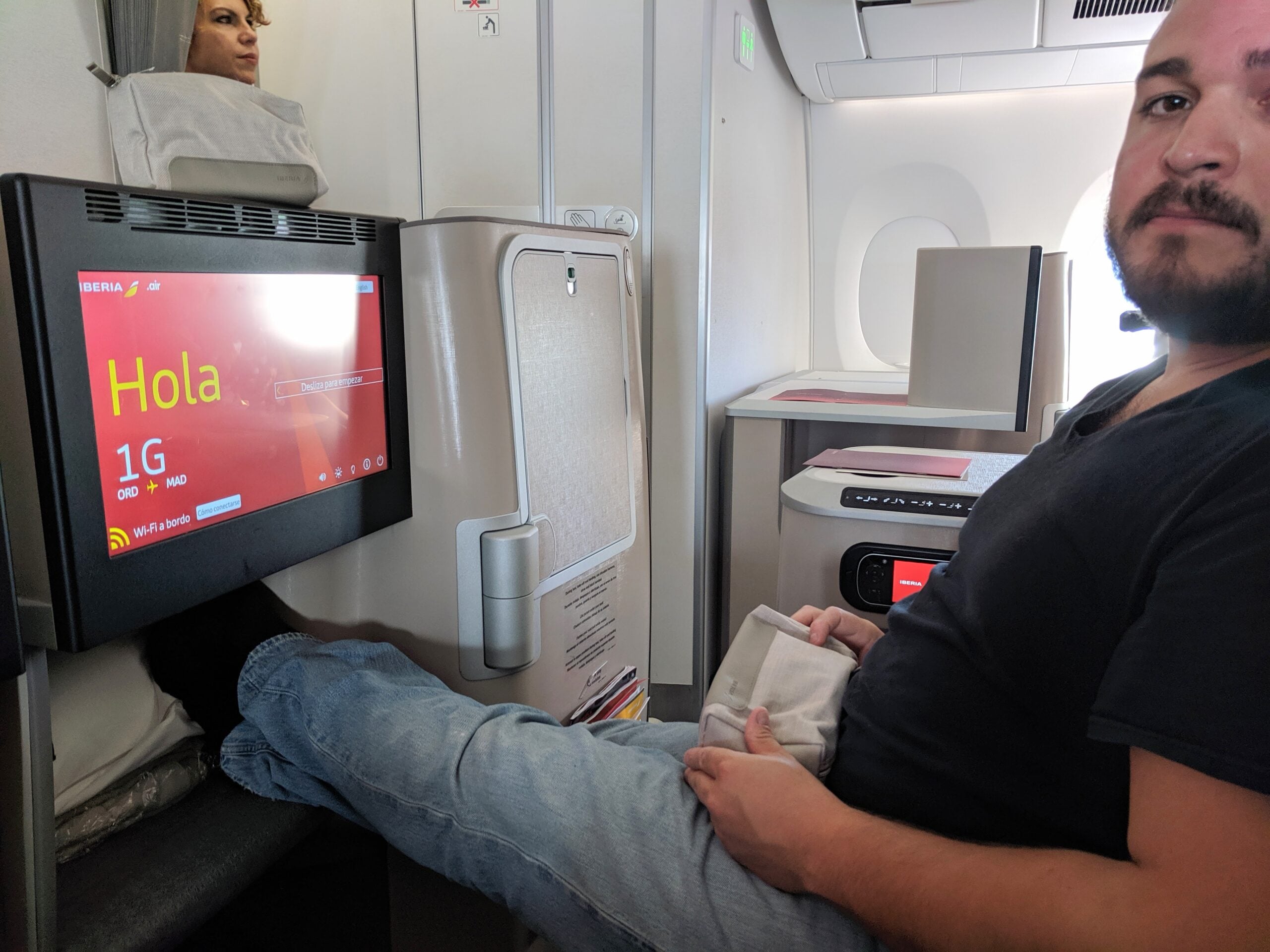
We’ve flown business class from Chicago to Madrid for $150 out of pocket. We’ve stayed in overwater bungalows in the Maldives and French Polynesia for completely free.

All thanks to travel points.
And not through some complicated system or hours of research every week. We just learned the right strategies early and stuck with them.
This list is everything I wish someone had handed me when we started.

#30: PLAN YOUR TRIP WITH BEFORE YOU BOOK ANYTHING
Most people try to figure out their itinerary and their award redemption at the same time. It’s a mess. Start by getting the trip clear in your head first. Which cities? Which airports? How many nights?

My personal recommendation is to use travel blogs first (Pinterest is a great place to find inspiration), and create a general outline. Once you have a good idea of what you want to do and where you want to go, use AI to help you hone the details.
That’s how Mike and I start every trip now. Figure out the shape of it in plain English before you get anywhere near airline sites or award calendars. The redemption research goes so much faster when you know what you’re looking for.
#29: PAY FOR GROUP EXPENSES AND COLLECT VENMO
If your friend group or family splits vacation rentals, dinners, or any big group expense, be the one who puts it on your card and collects from everyone else via Venmo or Zelle.

You earn the points on the full amount. They pay you back. We’ve done this for big family trips and it’s one of the easiest ways to rack up points without changing your actual spending at all.
#28: USE SHOPPING PORTALS (AND KNOW THE THEME PARK EXCEPTION)
Before you buy anything online, check if there’s a portal bonus available. Rakuten is the main one. It’s completely free to use, and you can create an account here*.
*Use my link above to get $50 when you sign-up (if you haven’t created an account already).

Link your Rakuten account directly to your Amex Membership Rewards and you’re earning extra points on purchases you were already going to make.
It takes about ten minutes to set up and runs on autopilot after that.
Pro-Tip: Rakuten excludes theme park tickets, but you can use Capital One Travel to book Disney and Universal tickets through their portal at 5x points.
#27: OPEN GOOGLE FLIGHTS BEFORE YOU START SEARCHING AWARDS
The Google Flights price calendar shows you the cheapest windows across an entire month at once. Figure out when to go before you start digging into award availability.

I always have a Google Flights tab open for research when I’m trip-planning.
#26: LEARN WHAT A POSITIONING FLIGHT IS
If you live near a smaller regional airport and can’t find the award you want departing from home, it might be worth flying into a major hub first to connect to an international award flight. That first leg is called a positioning flight.

I do this from Minneapolis all the time. I fly from Minneapolis to Chicago, New York, or Los Angeles regularly.
It adds a connection, yes. But I’ve used this to make a trip work that would have been completely unavailable from our home airport.
#25: SUBSCRIBE TO AWARD FLIGHT ALERT SERVICES
There are services that notify you when award space opens up on the routes you care about. Going (which is formerly Scott’s Cheap Flights), Secret Flying, and others. Some are free, some have paid tiers.

Secret Flying has been my favorite since I began travel hacking back in 2017.
When award space opens on a popular route, it gets claimed fast. Mike and I have these set up for a handful of routes we’re watching right now. Set them and check when the alerts come in.
#24: SET HOTEL AWARD ALERTS
Award availability at the properties you want can be frustratingly limited, especially for popular Hyatt hotels. Two tools that help:
- Open Hotel Alert (free)
- Max My Point (a few dollars a month for pro features)

Set an alert for the property and dates you’re watching, and they’ll email you when something opens up. We’ve used this to book trips we thought were going to be impossible.
#23: STOP SEARCHING AWARD FLIGHTS ON AIRLINE WEBSITES
The award search on individual airline sites only shows availability for that one program, and it’s usually slow. Award search engines pull from multiple programs at once and save you hours.

Roame is free and excellent for most searches. I use it first, every single time. Seats.aero, Point.me, and Pointsyeah.com are other options I recommend. For any complicated trip or premium cabin search, start here instead of going airline by airline.
Read Next: 7 Skyscanner Tricks For Booking The Cheapest Flights 2026
#22: GET THE CO-BRANDED CARD FOR YOUR HOME AIRPORT’S AIRLINE
This is about layering on the right co-branded card for where you fly out of.

If you live near a Delta hub, the Delta card gets you free checked bags, priority boarding, and sometimes lounge access on trips you’re already taking. Same logic for United hubs, American hubs. The perks matter a lot more when the airline dominates your home airport.
#21: SEARCH FLEXIBLE DATES AND DESTINATIONS BEFORE YOU COMMIT TO A TRIP
This is how we find trips we didn’t know we wanted to take. Search from your home airport across the whole world for a given month and see what award availability looks like. Google Flights has a “Destinations” view for this. We also use Skyscanner often for this. Award search engines have similar tools.

Some of our best trips came from being open to wherever the points made sense. We hadn’t fully decided where we were going, so the availability decided for us.
#20: GET TSA PRECHECK COVERED BY YOUR CREDIT CARD
TSA PreCheck costs about $78 for five years. Plenty of cards cover that as a credit, including the Chase Sapphire Reserve, Amex Platinum, and Capital One Venture X.

If you’re not already in the PreCheck lane, this is the single fastest quality-of-life upgrade in travel. Five minutes versus forty-five at security. It took us embarrassingly long to get it, honestly. Do it!
#19: USE THE FREE CLEAR MEMBERSHIP YOUR AMEX CARD INCLUDES
Clear is separate from TSA PreCheck. It uses biometric scanning to move you to the front of the security line, before the PreCheck screening itself. It normally costs close to $200 a year.

The Amex Platinum and Business Platinum both include a free Clear membership as a card benefit. I signed up through my Amex Platinum and use it every time we fly now. If you have either of those cards and you’re not signed up, you’re leaving money on the table.
Mike doesn’t have an Amex Platinum, so we have to purchase his membership separately.
#18: GET GLOBAL ENTRY BEFORE YOUR NEXT INTERNATIONAL TRIP
Global Entry costs $100 for five years and gets you through US customs in minutes when you land from an international flight. It includes TSA PreCheck automatically.

Most premium travel cards reimburse the $100 application fee. Mike and I both have it, and I genuinely can’t imagine going back to the regular line after a long international trip.
Apply well ahead of time though, the wait for the interview appointment can be long.
Read Next: How To Save Money On Travel In 2026: 59 Tips, Tricks, & Hacks
#17: USE THE AIRPORT LOUNGE ACCESS YOU’RE ALREADY PAYING FOR
The Amex Platinum gets you into Centurion Lounges and Priority Pass lounges. The Chase Sapphire Reserve gets you Priority Pass. The Capital One Venture X gets you Capital One lounges and Priority Pass.

If you have any of these cards and you’re sitting in the main terminal paying $20 for an airport sandwich, stop. Find your lounge.
We make a point to do this every time we fly.
#16: DON’T CLOSE A CARD WITHIN THE FIRST YEAR
Two reasons: most welcome bonuses require keeping the card open for at least twelve months or they’ll claw the points back. And closing any credit account hurts your average account age, which affects your credit score.

After a year, if the annual fee doesn’t justify the benefits, call and ask to downgrade to a no-annual-fee version of the same card. That keeps the account age intact without the cost.
I learned this one the hard way early on because I applied to a lot of cards and then panick-closed many of them. Womp, womp!
#15: TIME YOUR CARD APPLICATIONS WITH BIG PLANNED EXPENSES
The fastest way to hit a welcome bonus minimum spend is to have a large expense already coming. Moving costs, home repairs, annual insurance premiums, estimated tax payments, a trip you’re already booking anyway.

We’ve timed card openings around home repairs, tax payments, even a big camping gear purchase. You’re spending that money either way.
Timing the application right means you hit the minimum spend in weeks instead of months.
#14: SET AUTOPAY TO STATEMENT BALANCE THE DAY YOU GET THE CARD
This is the number one thing I tell everyone who’s just starting out with points. Set autopay to the full statement balance before you use the card for a single purchase. Do it the day the card arrives.
Travel points are only “free” if you’re not paying interest. Interest charges will erase any value points could ever give you. Set it to the full statement balance, every month, automatically. Non-negotiable.
#13: DOWNLOAD THE TRAVEL FREELY APP
Travel Freely is free and tracks all your cards in one place: current points balances, upcoming annual fees, your Chase 5/24 count, and when each card will fall off your 5/24 clock.

I genuinely don’t know how people manage multiple cards without a tracker like this. It takes about ten minutes to set up.
#12: BOOK HOTEL STAYS DIRECTLY THROUGH THE HOTEL
When you book through Expedia, Hotels.com, or most third-party sites, most hotel loyalty programs won’t credit you points for the stay. Some programs also won’t honor your elite status benefits for third-party bookings.

Always book direct. We sometimes call and ask about rate matches when we’ve found a lower price somewhere else. A lot of hotels will match it, especially if you have any kind of elite status.
Read Next: How To Get An Airbnb Discount 2026: 9 Easy Tips & Tricks
#11: BOOK YOUR AWARD FLIGHTS BEFORE YOUR AWARD HOTELS
Award seat availability, especially in business and first class, is limited and disappears fast. Hotel award availability is usually more flexible and can often be found even close to your travel dates.

We’ve learned this one the hard way. Find and lock in the flights first. If you sort the hotels first, you risk having everything booked except the award airline seats you needed.
#10: FLEXIBLE POINTS CARDS BEAT CO-BRANDED CARDS FOR EVERYDAY SPEND
A Delta Amex earns Delta miles. That’s it.
A Chase Sapphire earns Ultimate Rewards points that transfer to Delta, United, Southwest, Hyatt, British Airways, and about a dozen other partners.

For everyday purchases, flexible points give you options. Co-branded points lock you into one program. Our base cards are all flexible points cards for exactly this reason. Co-branded cards layer on top of that for specific perks.
#9: LOOK INTO FIFTH FREEDOM FLIGHTS
This one flies way under the radar and it blew my mind when I first found out about it. Some airlines operate routes between two foreign cities as a stopover point in their network, but you can book those segments as standalone tickets with that airline’s miles.

For example, Singapore Airlines, operates flights from Houston to Manchester. You can book those with Singapore KrisFlyer miles at rates that would be impossible on US carriers for the same routes.
When the route fits your trip, the value is hard to beat.
#8: USE PARTNER PROGRAMS TO FLY THE SAME ROUTE FOR FEWER MILES
Every airline prices its own award flights on its own chart. But you can often book the exact same seat on the exact same plane using a different program’s miles, and pay fewer of them.

Air Canada’s Aeroplan program sometimes prices United-operated flights for fewer miles than United’s own program charges for the same seat. Mike and I research this for every international trip now.
The difference on premium cabin flights can be significant enough to make or break whether the redemption is worth it.
#7: EARN THE SOUTHWEST COMPANION PASS
The Southwest Companion Pass lets you designate one person to fly free with you on every Southwest flight for up to two full calendar years. You earn it by accumulating 135,000 qualifying points in a calendar year.
The strategy is to open two Southwest credit cards at the start of a new year and earn both welcome bonuses back to back. That often gets you very close to the threshold on its own.
Time it right and you get the pass for almost the full two years. We have done this and a companion flying free on every flight adds up incredibly fast, especially if you’re flying Southwest regularly.
#6: BOOK HYATT THROUGH CHASE ULTIMATE REWARDS TRANSFERS
IMPORTANT NOTE: As of May 20th, Hyatt is changing its reward program, and it’s not goign to be nearly as awesome as it once was. This can happen in the points world, so just a head’s up!

Chase Ultimate Rewards transfer to World of Hyatt at a 1:1 ratio, and Hyatt is consistently one of the best hotel programs for award value. The points requirements are reasonable, and Hyatt hasn’t devalued as aggressively as some other programs have over the years.
A Hyatt category 4 property can often be booked for around 15,000-20,000 points per night for a room that would cost $350 or more in cash. We use this combination for Hyatt stays regularly.
If you have a Chase Sapphire card, you already have access to one of the strongest hotel redemptions in the points world.
Read Next: 8 Ways to Save Big on Stays Around the World
#5: BUILD YOUR BASE AROUND FLEXIBLE POINTS CURRENCIES
Chase Ultimate Rewards, Amex Membership Rewards, Capital One Miles, and Citi ThankYou Points are all flexible. You can transfer them to airlines, hotels, and through the portal. You have tons of options.

Delta miles are Delta miles. Marriott Bonvoy points are Marriott Bonvoy points.
Build your whole points strategy around this principle first. When a program devalues its award chart (and they all do eventually), flexible points holders can redirect to a different partner. Fixed-currency holders are stuck.
#4: OPEN BUSINESS CARDS TO PROTECT YOUR 5/24 SLOTS
Chase’s 5/24 rule means you get denied for most Chase cards if you’ve opened 5 or more personal credit cards in the past 24 months. Since Chase makes some of the best travel cards available, protecting those slots matters.

What most people don’t realize is that business credit cards from Amex, Capital One, Citi, and Barclays typically don’t report to your personal credit file. That means they don’t count against your 5/24 status. You can earn big business card welcome bonuses without using a single personal slot.
Once I understood this, it changed how I approached the whole card strategy. This is one of the most important things to understand once you’re past the beginner stage.
#3: DON’T OPEN A CO-BRANDED HOTEL CARD WITHOUT A REDEMPTION PLAN
Hotel co-branded cards are easy to get excited about. Big welcome bonuses, free night certificates, automatic elite status tiers, etc. But hotel points are generally worth less per point than airline miles or flexible currencies, and getting value out of them requires a well thought out plan.

Before you open a Marriott card or a Hilton card, ask yourself, “do I have specific properties I want to book, or am I just chasing the sign-up bonus?”
A flexible points card is almost always the better use of a 5/24 slot if you don’t have a clear redemption in mind.
#2: BRING IN A PLAYER 2
If you have a spouse, partner, or anyone else you travel with regularly and trust with a card, you have access to twice as many welcome bonuses.

Each person opens their own cards and earns their own bonuses independently. You don’t share accounts, you just coordinate so you’re not both opening the same card at the same time.
We do this, and the combined points we’ve built up together are what made our biggest trips possible. If you’re doing this as a solo earner, you’re leaving a significant amount of potential on the table..
#1: WELCOME BONUSES ARE WHERE THE POINTS COME FROM
If you spend $4,000 a month on a 2x card, you’re earning around 96,000 points a year. That’s decent.

A single welcome bonus on a card like the Chase Sapphire Preferred or Capital One Venture X can be 75,000 to 100,000 points for spending that same $4,000 in the first three months.
Welcome bonuses are the engine of this whole strategy. Every other tip on this list is about protecting your ability to keep earning them, or squeezing more value out of the points once you have them. Get great at earning welcome bonuses, the rest follows from there.
The Wrap-Up
I know that’s a lot to take in at once.
If you’re just starting out, don’t try to implement all thirty things this week. Start slow.. get a card with a strong welcome bonus, set autopay to the full statement balance the day it arrives, and earn that first bonus.
Every trip we have taken on points started that way.
Who We Are