How She Built a Life in Colombia on $500 a Month
What does it really look like to leave behind a stable job, move abroad, and build a life in a place you never expected to stay?
In this interview, we hear from Kate Dana of Cocameca and how she did exactly that in Colombia. Her story offers both an honest look at the challenges and a reminder of what is possible when you say yes to something new.
what led you to Colombia?
I was born in New York and grew up in South Carolina, spending my early years on the East Coast of the United States.
As a child, I lived on the island of Antigua in the British West Indies. In 2003, I moved to California, bringing with me an adventurous spirit and a lasting love of coastal Caribbean places.
In 2012, after several years of solo travel through Spain, Mexico, and the Dominican Republic, I left a job with the California State government to earn a TEFL certificate in Guadalajara, Mexico.
I lived in Tlaquepaque and Puerto Vallarta, teaching high school computer science at a trilingual school.
When my visa expired in 2013, I applied to WorldTeach, a volunteer program founded by Harvard students.
I was thrilled to be placed in Barranquilla, the hometown of Shakira and the national baseball champions, the Juniors de Barranquilla.
While in Barranquilla, I fell in love with Colombia and stayed for three more years, two in Cartagena and another in Barranquilla, from 2014 to 2018.
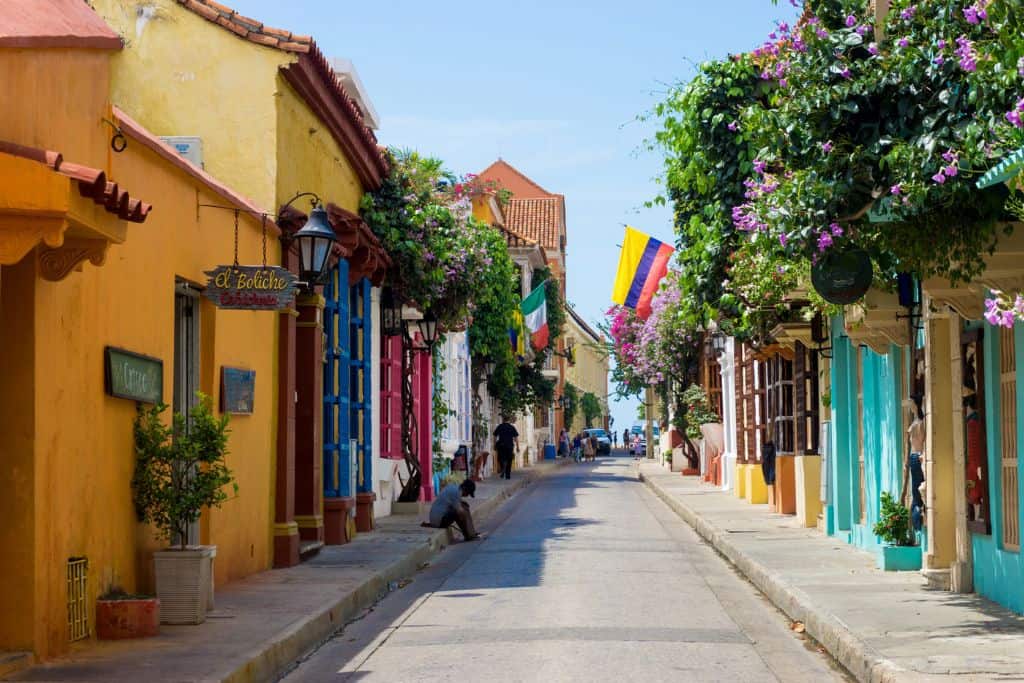
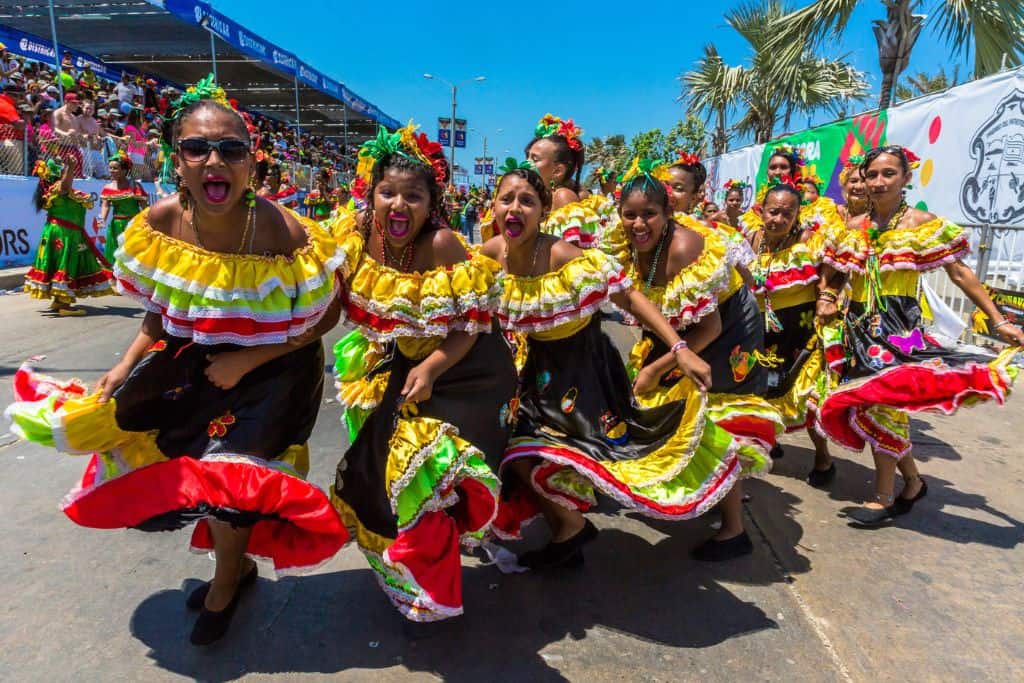
I became Costeña at heart, embracing Carnavales, vibrant music, tropical weather, and the Magdalena River. I embraced pura gozera:truly enjoying life.
What was the visa process like, and what did it take financially to get started?
My first visa was a T1 for volunteers arranged through WorldTeach. I received a small stipend, but as a school-based representative, I wasn’t technically employed.
Later, my employers, a school in Cartagena and a business English company based in Bogotá, handled the paperwork for my subsequent work visas.
To simplify my return in 2015, I submitted documents to the Colombian consulate in Atlanta, Georgia.
The process was surprisingly easy; however, obtaining a cédula, Colombia’s national ID (similar to a U.S. Social Security card), was more challenging.
It took eight months to process in Cartagena, during which I befriended the staff at Migración through my regular visits.
Eventually, I received my coveted Cédula de Extranjería, the official ID for foreign residents.
Before moving abroad, I sold nearly all my belongings, including furniture, clothes, and household items, on sites like Etsy, eBay, OfferUp, and Craigslist.
I also sent a newsletter to about 200 people asking for sponsorship for my volunteer year.
Their generosity was amazing. I raised a total of $5,500 to support myself and buy supplies for my students.
Fortunately, after my first volunteer year, I was hired to teach full-time in a position that included a good salary and a retirement plan.
What were your first impressions of Colombia, and how did they change over time?
My first impressions of Colombia were that everyone was lively. Most people were happy, a few were sly, but overall, they were proud of their country and always striving for a better life.
Costeños love to party. They don’t stay sad for long and have a wonderful ability to live fully in the moment, which feels incredibly refreshing.
During my first year, after spending three difficult months with a family who treated me poorly, I moved in with a lovely single mother and her two sons in the south of Barranquilla.
They rented me a sizable room for the rest of 2014 and quickly became like family, teaching me Spanish and sharing more about the culture than I could ever learn from a book. I still visit them every year when I return for vacation.
Over four years, my feelings for Colombia grew from culture shock and uncertainty to deep admiration and love.
The country challenged me in ways I never expected and ultimately captured my heart in the best way possible.
To this day, Colombia remains one of my happiest places and a destination I always love visiting.
What was your experience like as a volunteer teacher, and what stands out most?
Volunteer teaching is difficult and wonderful at the same time.
It involves long hours, early morning classes, lengthy commutes by public transit, and high expectations to educate students while still writing reports, attending workshops and events, and positively representing your home country.
It’s also about sharing the joy of a child learning a new language, helping a Spanish-speaking peer present information in English, and feeling an overwhelming sense of gratitude and fulfillment.
I was assigned to an inner-city public Catholic school with mostly low-income families and an incredibly supportive Sister as our director.
What stands out most is her kindness, her acceptance of students from all backgrounds, and her unwavering belief that everyone can learn.
She did not believe that circumstances determine your future, you do. She was a serious leader with a generous soul.
I also made friends with several of the teachers, some of whom I remain close with today.
They helped me understand the culture on the coast and how to teach wiggly, giggly 4th- and 5th-grade girls in classes of 36 to 40 students.
Their practicality, sensibility, warmth, and sense of humor helped make my experience unforgettable.
What made you stay beyond your first year, and what did that time look like?
Of the 32 volunteers in our group, 11 were placed in Barranquilla. At 43, I was older than most of them, and they often excluded me from their social activities.
I focused on making friends with local Colombians, which enriched my experience far more than if I had only socialized with the other volunteers.
By the end of the year, it was these friends who encouraged me to stay, along with my new love for the country.
Much of my time was spent traveling and learning Spanish, especially Costeño slang.
Even as a full-time teacher, I found opportunities to explore other cities on weekends and during festivos.
Colombia has 18 national holidays, plus additional days off in Catholic schools for saints’ days. Public transportation is mostly affordable, easy to navigate, and relatively safe.
While living in Barranquilla and Cartagena, I traveled solo to many incredible places, including: Bogotá, Chía, Cota, Coveñas, Guatapé, Isla San Andrés, Máncora, Medellín, Minca, Mompox de Santa Cruz, Palomino, Parque Tayrona, Pasacaballos, Riohacha, Rodadero, Sabanalarga, Santa Marta, Sincelejo, Tolú, Valledupar, Zipaquirá, Isla Barú, and Taganga.
Each destination offered its own charm, from fast-paced city life to scenic beaches and mountains, making every trip an adventure.
What challenges did you face, and how did you navigate them?
Culturally, Colombia is a country of conundrums that always keeps me guessing. The people are both touchy-feely and elusive at the same time.
It can be confusing to determine what’s what with someone you’ve just met, and it isn’t until they really get to know you that you are accepted.
Then, the next time you meet, it’s all besos and abrazos (hugs and kisses). Having patience with people appears to be key.
Some of the logistical challenges include time management in everyday life. Colombians take their time doing everything.
True-to-life, hilarious memes include one showing a person on the phone saying they are arriving to meet a friend who is in view, when really they are still in the shower and nowhere close to being nearby. I crack up every time at this.
I learned to navigate these challenges by letting the other person decide if they wanted to be friends with me, rather than trying to force the friendship.
I also learned to slow down and relax about time. When I returned to live in the United States, these were two cultural differences I had to make a concentrated effort to adjust to again.
What does the cost of living look like in Colombia?
Even as a volunteer, I always found the cost of living affordable in Colombia.
Rent is reasonable, groceries and household items are relatively inexpensive, and transportation ranges from very cheap to posh and spendy.
Like anywhere, it depends on your lifestyle. Prices vary according to location; for me, Barranquilla is more affordable, while Cartagena, as a tourist-heavy city, often carries a higher price tag.
I once wrote an article titled “How to Live in Barranquilla on 500 U.S. Dollars a Month” because I was doing it.
My rent for a large room in a nice shared apartment in Altos de Prado, the north of the city, was $150.00, including all utilities.
Groceries, which are often bought fresh each day, averaged around $50.00 a week. Dining out, transportation, coffee, and entertainment rarely cost more than $150.00 each month.
I managed to save money living in Colombia and used the accrued funds to travel to places like Ecuador and Peru. I also flew several times to and from the U.S. to visit family and friends.
Even though I lived there many years ago, I still find Colombia to be one of the more affordable countries for most people to visit today.
Was there a moment or relationship that stayed with you?
Colombia is said to have “realismo mágico,” or magical realism, which combines fantasy with reality.
I have dozens of momentos mágicos that left a deep impression on me. Most of them involve unforgettable meals (Colombian food is delicious) or huge parties, because Costeños love to celebrate.
I learned to appreciate fútbol (soccer in the U.S.) and how to pray the rosary despite not being Catholic. All magical things.
In addition to befriending incredible people with interesting jobs and wonderful families, I made friends with two women, one in Barranquilla and the other in Cartagena, who are still like sisters to me.
Whenever I have a cultural question, a sadness to release, or a celebration to share, I reach out to them, and I am immediately filled with love.
We share triumphs, troubles, and the occasional chisme (gossip).
Also, Miss Colombia 2022, Valentina Espinoza Guzman, was one of my English students during my first year in Cartagena.
I remember being in the U.S., watching her accept the crown on television, and feeling immense pride and joy in having this beautiful young woman as a student.
Now that’s magical realism.
How did living in Colombia shape you?
Colombia shaped my perspective in all these ways. Personally, I learned about my own resilience, especially in uncertain times.
I learned how to trust myself to make the best choices, how to give a strong first impression, and when not to attract attention to myself, such as in unfamiliar places.
I developed street smarts, confidence in solo travel, intuitive reasoning, and, most of all, compassion for others.
Professionally, I learned to diversify my skills to have more to offer. I learned when to pivot or change directions for a more positive outcome.
I also learned that Spanish is a fantastic skill to have. One of the best things I ever did in my life was learn a new language.
Globally, I learned the value of having a sincere interest in what other people are doing around me—if they want me to—without being intrusive.
I honed my skills in listening, accepting, and adapting, three things I continue to apply years later.
What advice would you give someone considering teaching abroad?
First of all, if you have any desire at all to be a volunteer teacher abroad, do it.
If you choose Colombia and go with all your heart, you will have many opportunities. I hope you’ll fall in love with it as I did, but if you don’t, many other countries can be just as rewarding.
Going in, I recommend earning accreditation to teach English and obtaining a TEFL or TOEFL certificate.
Even if you don’t pursue education, a certificate is great to have. You never know what may happen with your job, and English teachers are always in demand.
At first, living abroad may be challenging or even difficult, but stick with it, because it usually gets easier. Make friends with the people around you and lean into your work as a foundation for your being there.
Have an open mind, be accepting of others, and stay curious without being naive.
Learn about the culture before you go, practice kindness, and always have a “why” to refer to when you wonder why you’re there.
Don’t idealize life at home, but don’t turn your back on where you’re from. Above all, live the adventure that is life.
Living abroad is rarely simple, but it can be deeply rewarding in ways that stay with you long after you leave.
Whether you are considering volunteering in Colombia or simply curious about what life could look like somewhere new, there is something here to take with you.
Sometimes, the biggest shifts come from following a quiet pull toward something different and seeing where it leads.
