Virginia Has 20 Mountain Towns Worth the Drive
Mike and Laura Travel contains affiliate links and is a member of the Amazon Services LLC Associates Program. If you make a purchase using one of our links, I may receive compensation at no extra cost to you.
Most “Virginia mountain towns” lists hit the same six places. Floyd, Abingdon, Damascus, Staunton, Lexington, and one more for variety.
Fine. We agree. Those towns earned it.
But if you’ve spent real time in the Blue Ridge or the southwest corner of the state, you know it goes way deeper than that.
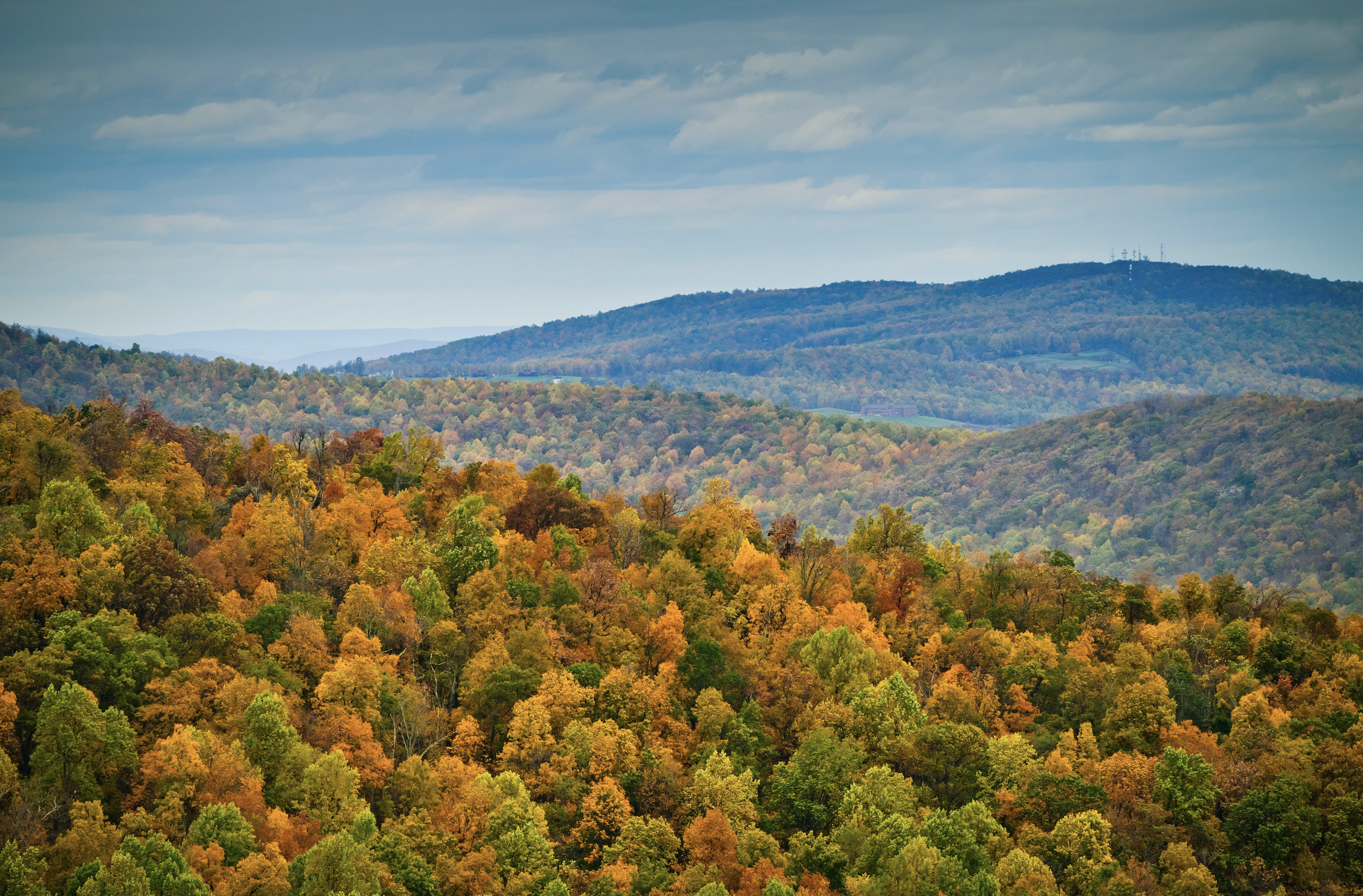
There’s a town where the Appalachian Trail crosses the literal sidewalk on Main Street (this is a big deal in the thru-hiking community). A bowl-shaped valley with a small Amish community where Vanderbilt almost built the Biltmore.
And an outdoor drama based on a 1908 novel still running every summer since 1964.
This list is ranked #20 down to #1. The higher the number, the less likely you’ve heard of it (but maybe you have!).
20. Big Stone Gap
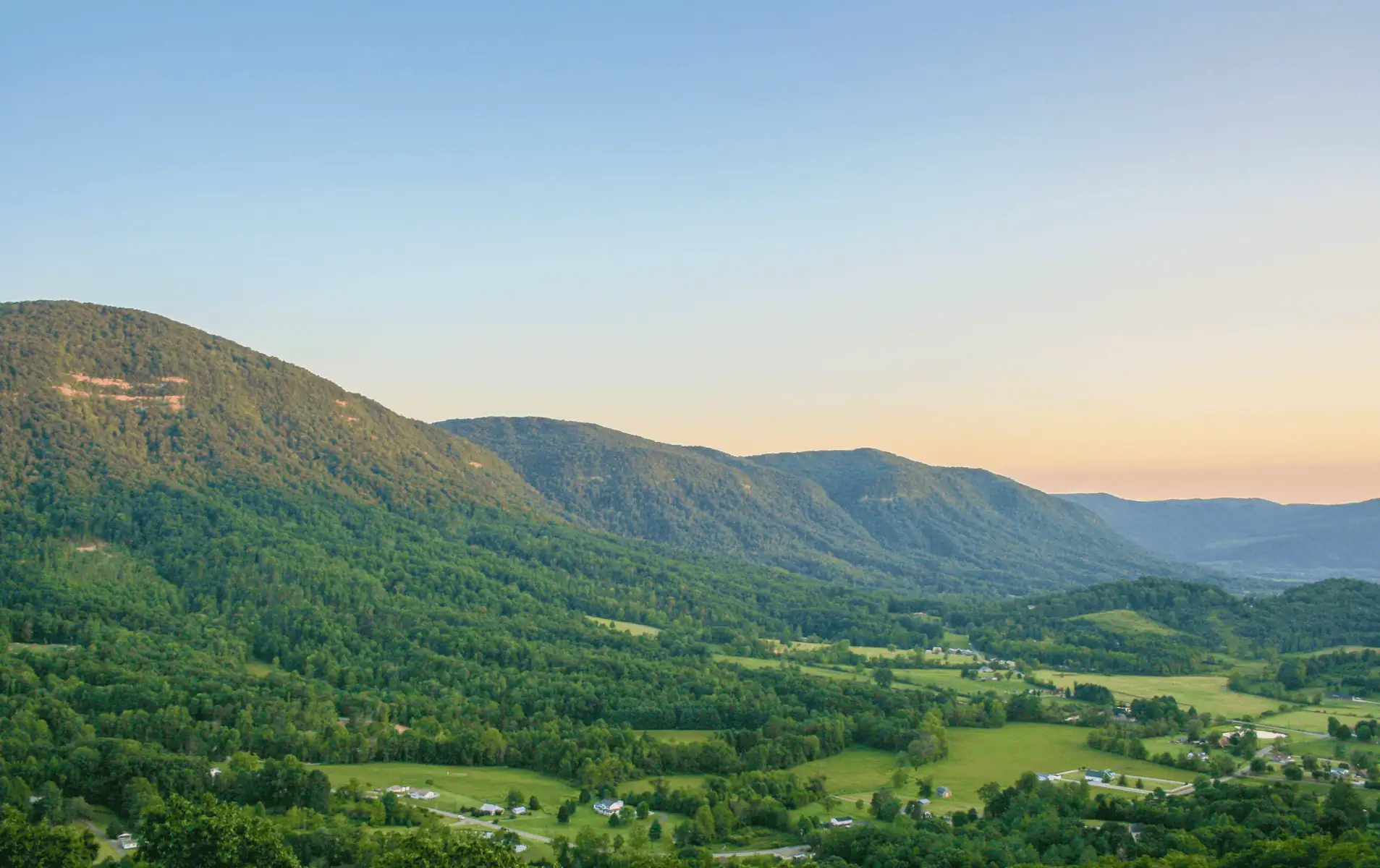
There’s an outdoor drama in southwest Virginia that has been running every summer since 1964. It’s based on a 1908 novel.
The Trail of the Lonesome Pine plays summer nights at the June Tolliver Playhouse outside under the stars.
It’s a love story between a mountain girl and a mining engineer set during the coal boom. The author’s actual house in town is now a museum.
It’s crazy that more people don’t know about it!
Big Stone Gap sits in the Powell Valley, way out toward the Kentucky line (coal country). This is the version of Appalachia that doesn’t get curated for the Blue Ridge B&B crowd.
That’s why it leads off the list.
Where To Stay Near Big Stone Gap
19. Tazewell
This one’s the bowl-shaped valley from my intro!
Burke’s Garden, technically inside Tazewell County, is a valley shaped like the inside of a soup bowl. It’s about 8 miles long, and surrounded by Garden Mountain on every side. Locals call it God’s Thumbprint, and once you see it on a topo map, the name makes total sense.
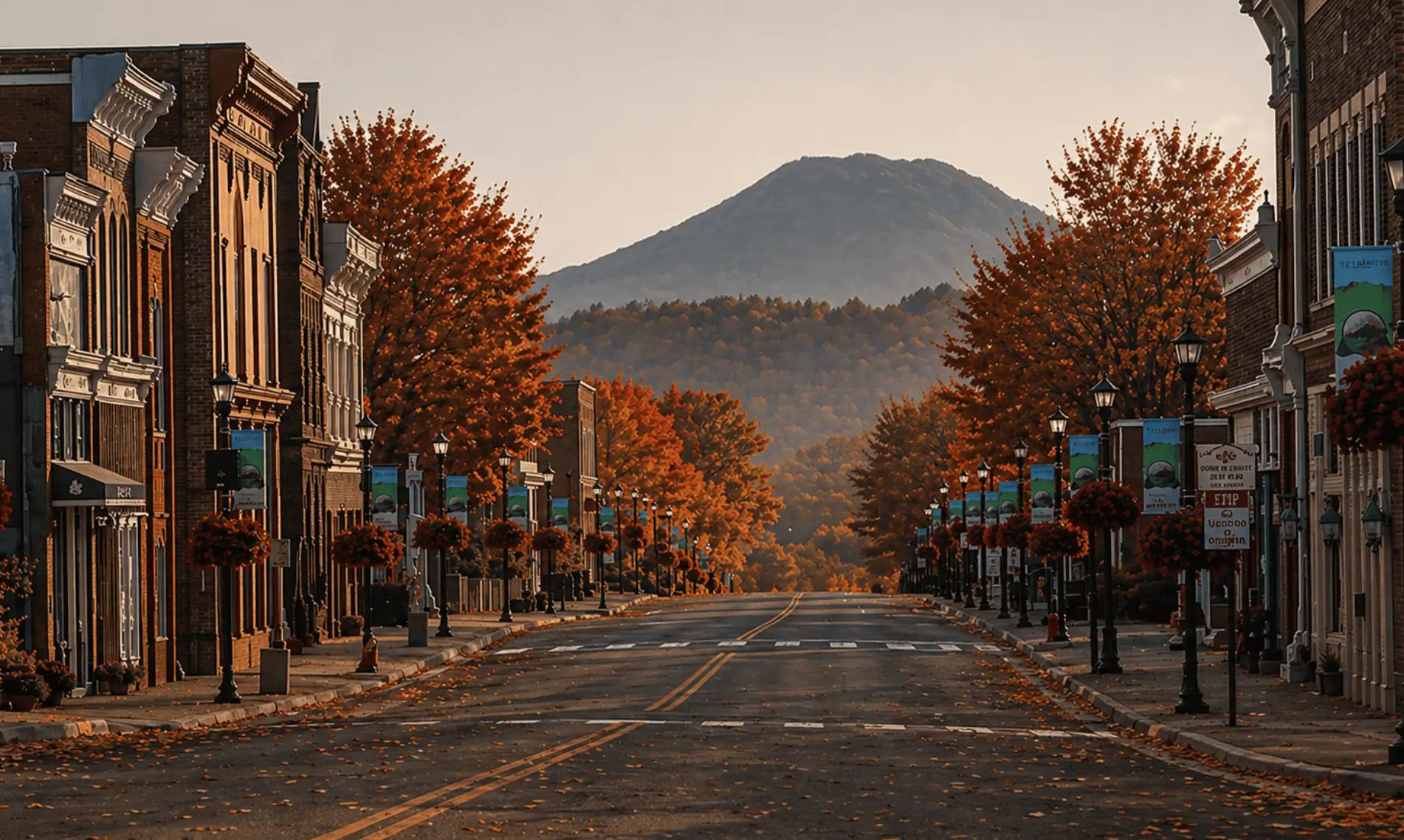
There’s one paved road in, coming over the mountain from the north.
In the 1880s, Vanderbilt wanted to build the Biltmore here. Locals refused to sell. So, he went to Asheville instead.
There’s also a small Amish community of about 100 people inside the bowl. They came in the 1990s, left for a stretch, and came back.
There’s no gas station, no stoplight, and no post office anymore.
The whole place feels like it shouldn’t be inside Virginia, much less one county, but it is!
Where To Stay Near Tazewell
18. Monterey
In Monterey, there’s more sheep than people. That’s the real ratio, not a joke!
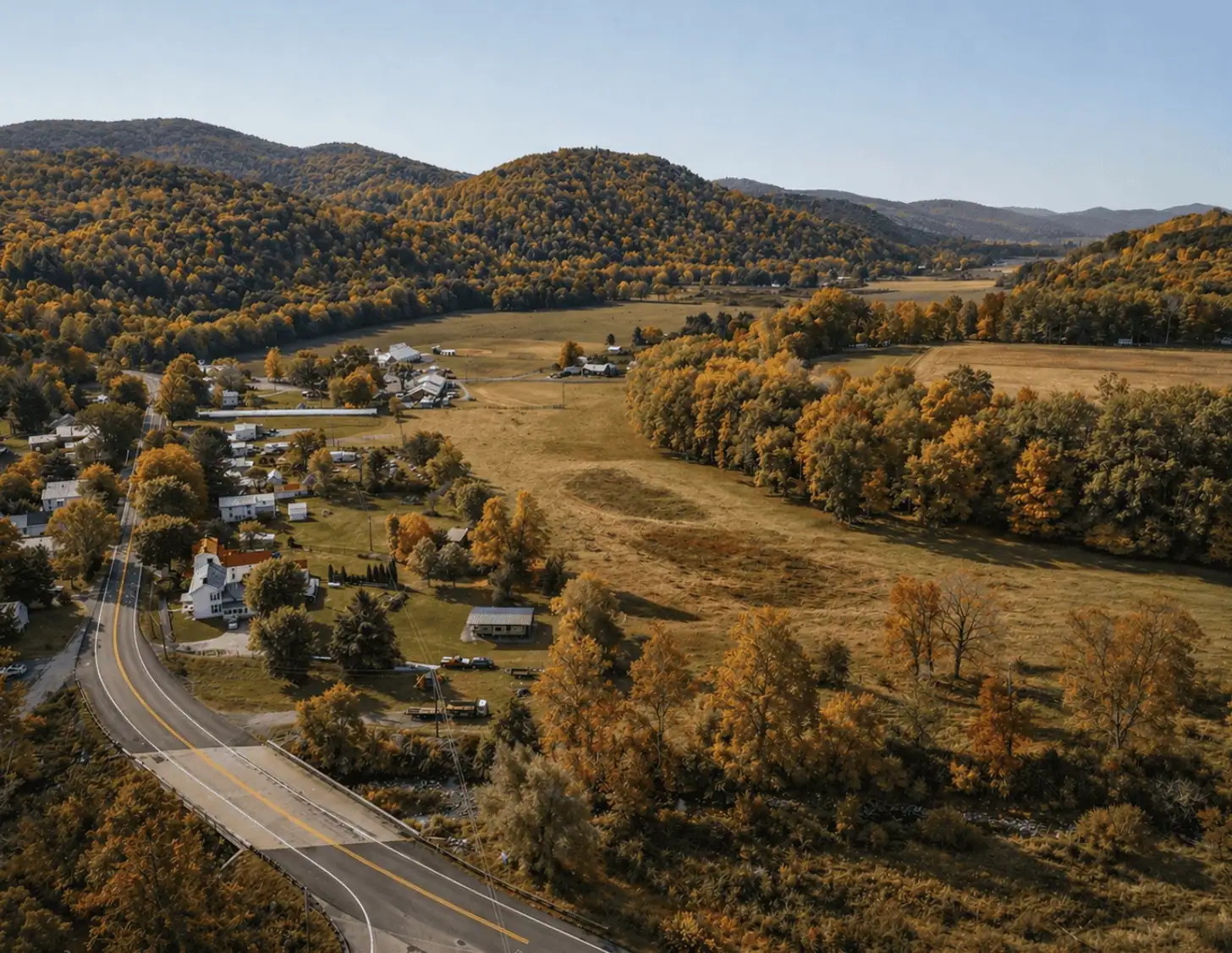
Monterey is in Highland County, which is the least-populated county in the state. The town itself is around 200 people, sitting up at high elevation with no interstate within easy reach.
People call this the “Little Switzerland of Virginia.” You can lean into the nickname or not, it’s your call. We’ve met people who think it’s silly, and others who think it’s appropriate.
The hook is the Highland Maple Festival, which has been running since 1959. It’s two weekends every March, and it’s county-wide rather than centralized in one spot.
Sugar camps open up for free tours, and you’ll find pancake breakfasts and maple doughnuts that sell out way before noon (so get there EARLY).
Outside of festival weekends, the town is genuinely quiet. That’s most of the appeal.
Quick List: What To pack For Virginia
- Moisture-wicking base layers (women, men)
- A fleece or light down layer for warmth (women, men)
- A waterproof and windproof outer shell (women, men)
- Sunscreen (nontoxic recommendation)
- Lip balm with SPF (recommendation)
- Polarized sunglasses (women, men)
- Hiking boots (women, men)
17. Warm Springs
A correction to anything you might have read in the last few years..
The Warm Springs Pools are open. They reopened in December 2022 after a long restoration, and you can soak there now by reservation through the Omni Homestead.
The original Gentlemen’s Pool House is from 1761. Believed to be the oldest spa structure in the country.
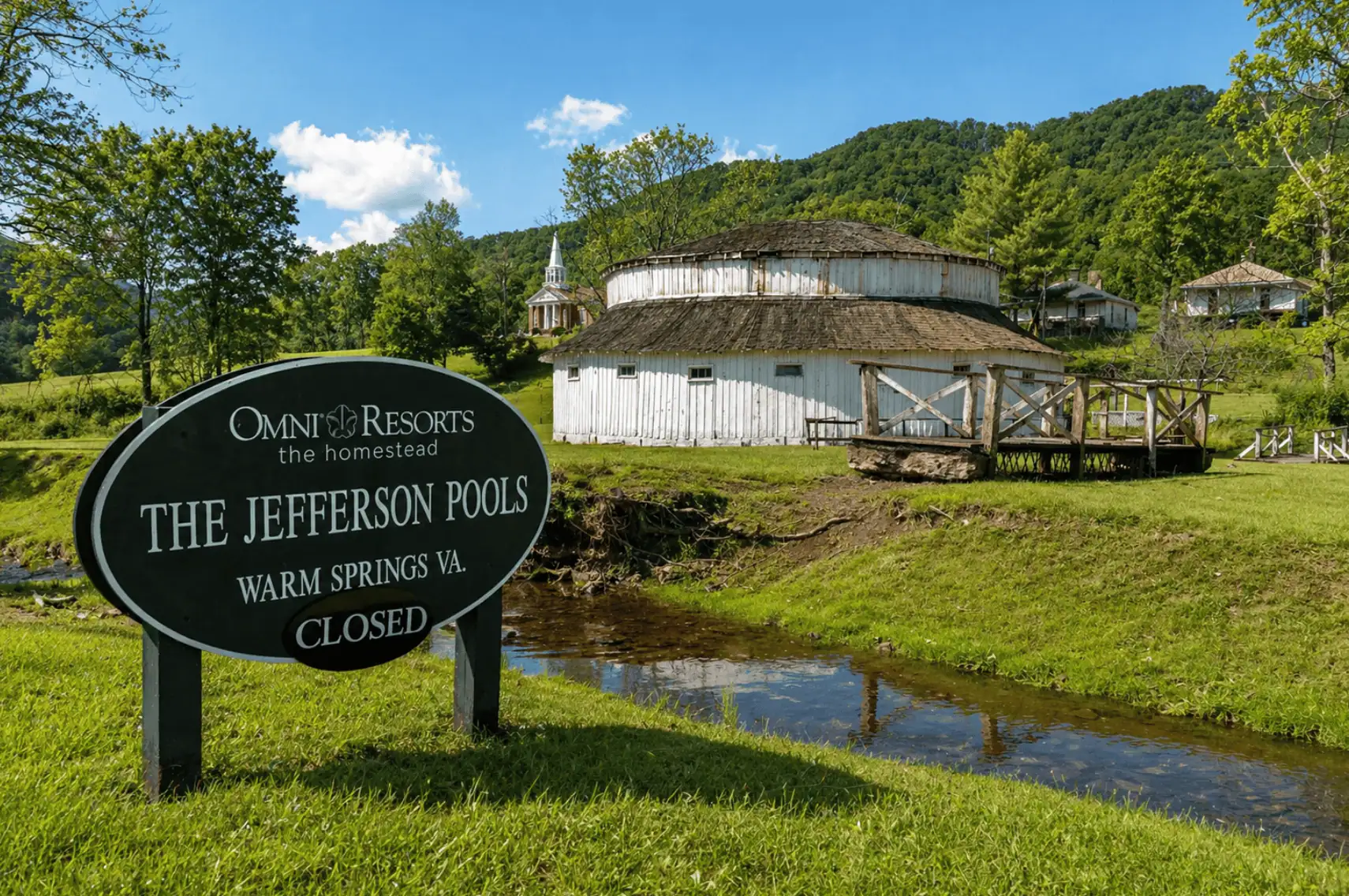
The water comes out of the ground at about 98 degrees. You won’t be able to bring your phone inside. Quiet is required, which is its own kind of luxury.
Locals will tell you winter is the best time. Snow falls onto the steam and it’s pure bliss.
The town itself is sleepy, but sleepy is a good thing for locals and visitors alike.
16. Covington
There’s exactly one curved-span covered bridge left standing in the entire United States. Just one!
It’s three miles outside Covington.
Built in 1857, the bridge has a curve in the middle because the first two bridges at this spot were washed out by floods.
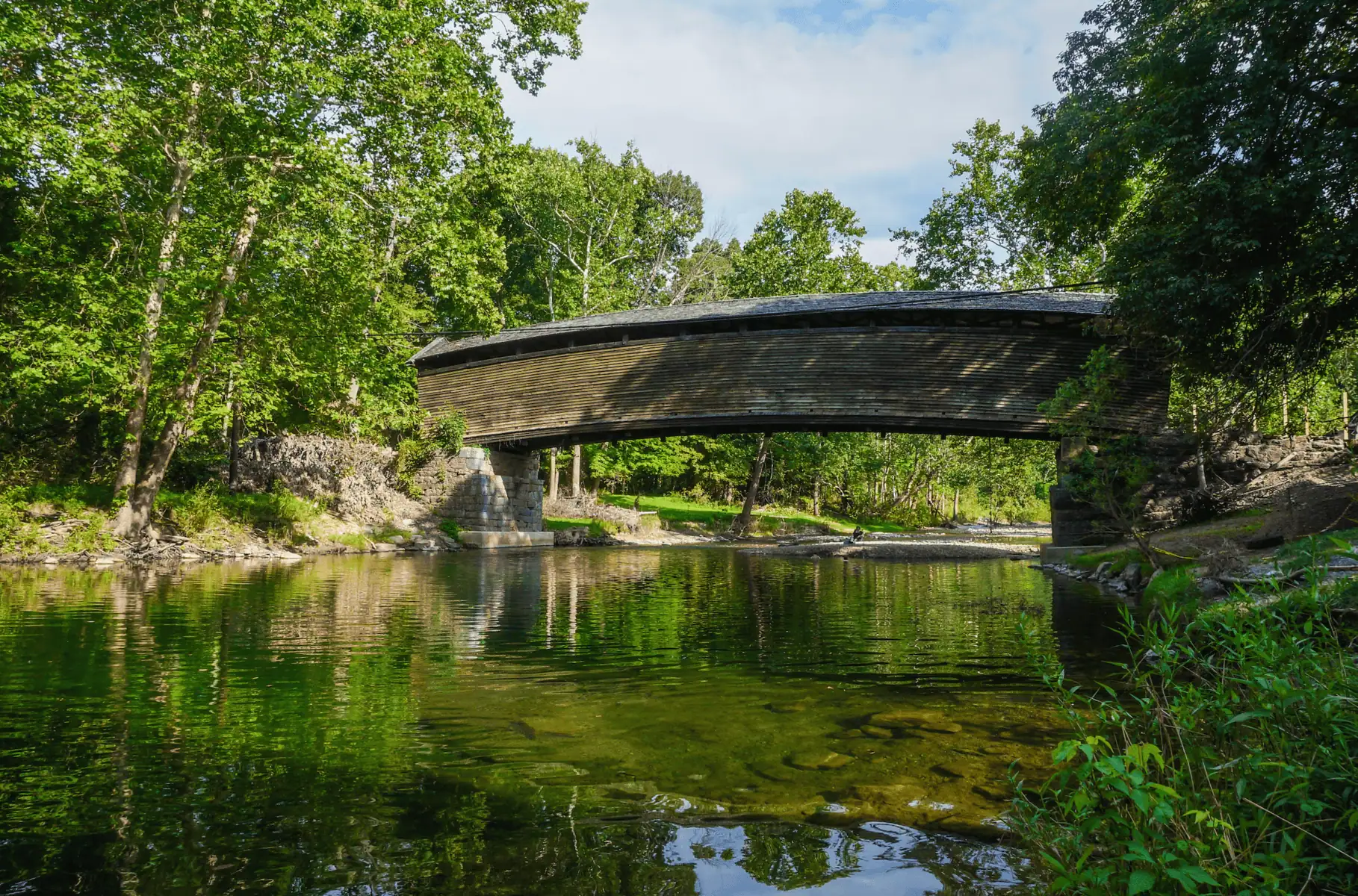
The best part of the story is the 1953 restoration, which was funded by a local women’s club. They raised the seed money to save the bridge. A true underdog story in my opinion!
The town itself is a paper mill town, but most people come for the bridge.
Where To Stay in Covington
15. Clifton Forge
The Virginian native’s pick for the best mountain town that flies under the radar is Clifton Forge, and it’s no contest. It comes up over and over again in our travel groups.
The town used to be a major C&O Railway hub. The old freight depot is now a Heritage Center downtown with restored cabooses, a 1922 dining car, and a model train layout that’s super neat.
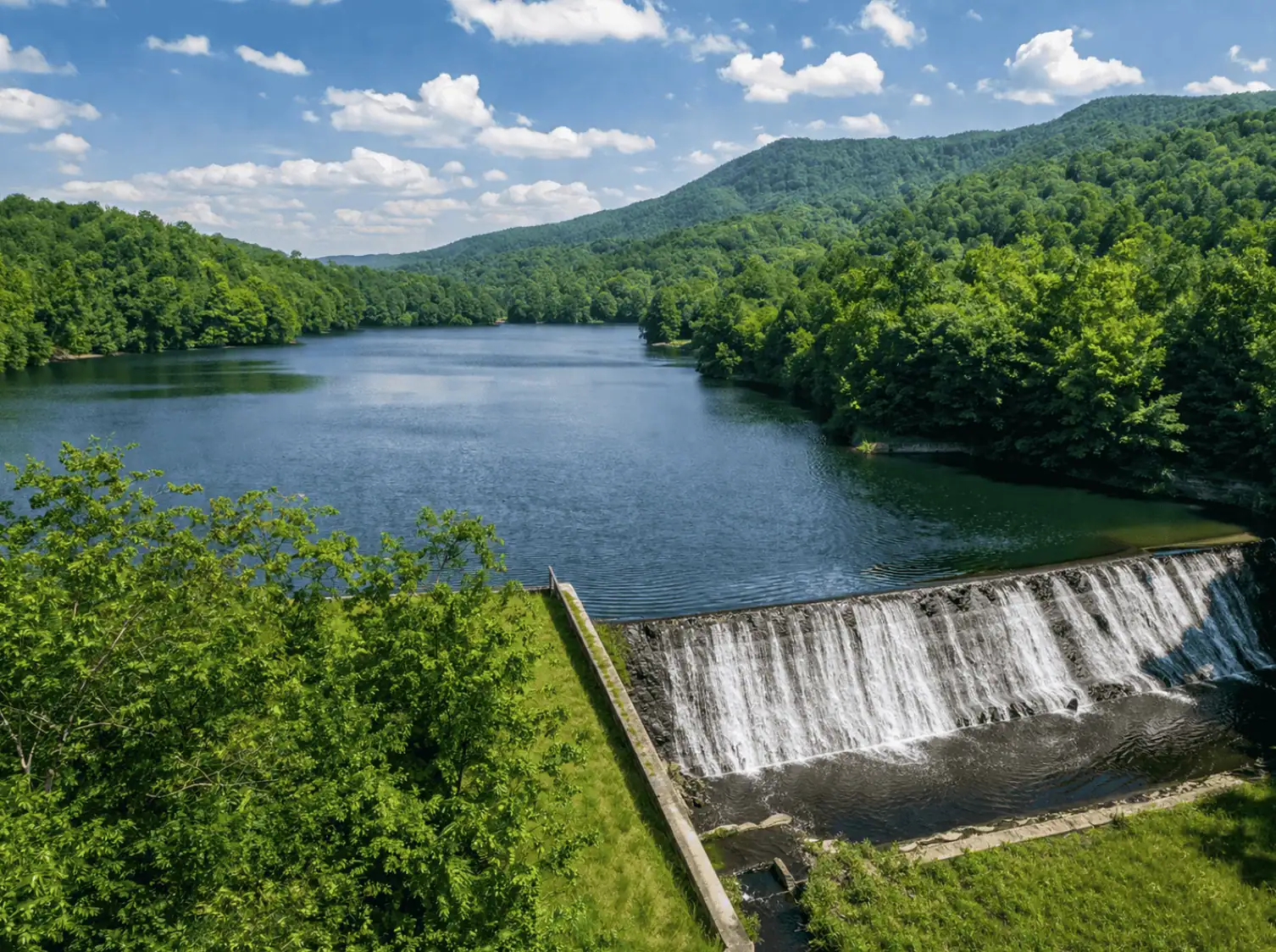
Five miles north is Douthat State Park, one of Virginia’s original six state parks. The way Virginia state parks look elsewhere in the system is partly because of this one.
Downtown is doing the slow revival thing, and it’s worth a stop.
14. Sperryville
Sperryville has a restaurant the Washington Post named one of the top 10 in the country!
It’s called Three Blacksmiths, and it’s on Main Street. There are sixteen to twenty seats, and they allow one seating per night. It’s open Wednesday through Saturday at 7 PM.
The tasting menu runs around $168 per person, and reservations open more than 200 days out. 200 DAYS OUT.
Yes, that math is right. You’re booking dinner more than six months in advance for a 16-seat restaurant in a 300-person village.
The other half of Sperryville’s identity is Pen Druid Brewing, which is on a farm a mile and a half outside town. You’ll find picnic tables, a wood-fired food trailer, and lots of dogs and kids. They currently only have weekend hours available.
Most posts file Sperryville as the “gateway to Skyline Drive.” The eastern entrance is right here at Thornton Gap. But the food scene has fully outrun that frame, and it’s its own thing now.
13. Buena Vista
The Maury River runs through the middle of town, and tubing it is what people do here in summer. The river drops down out of Goshen Pass, passes Lexington, and meets the James a little further south.
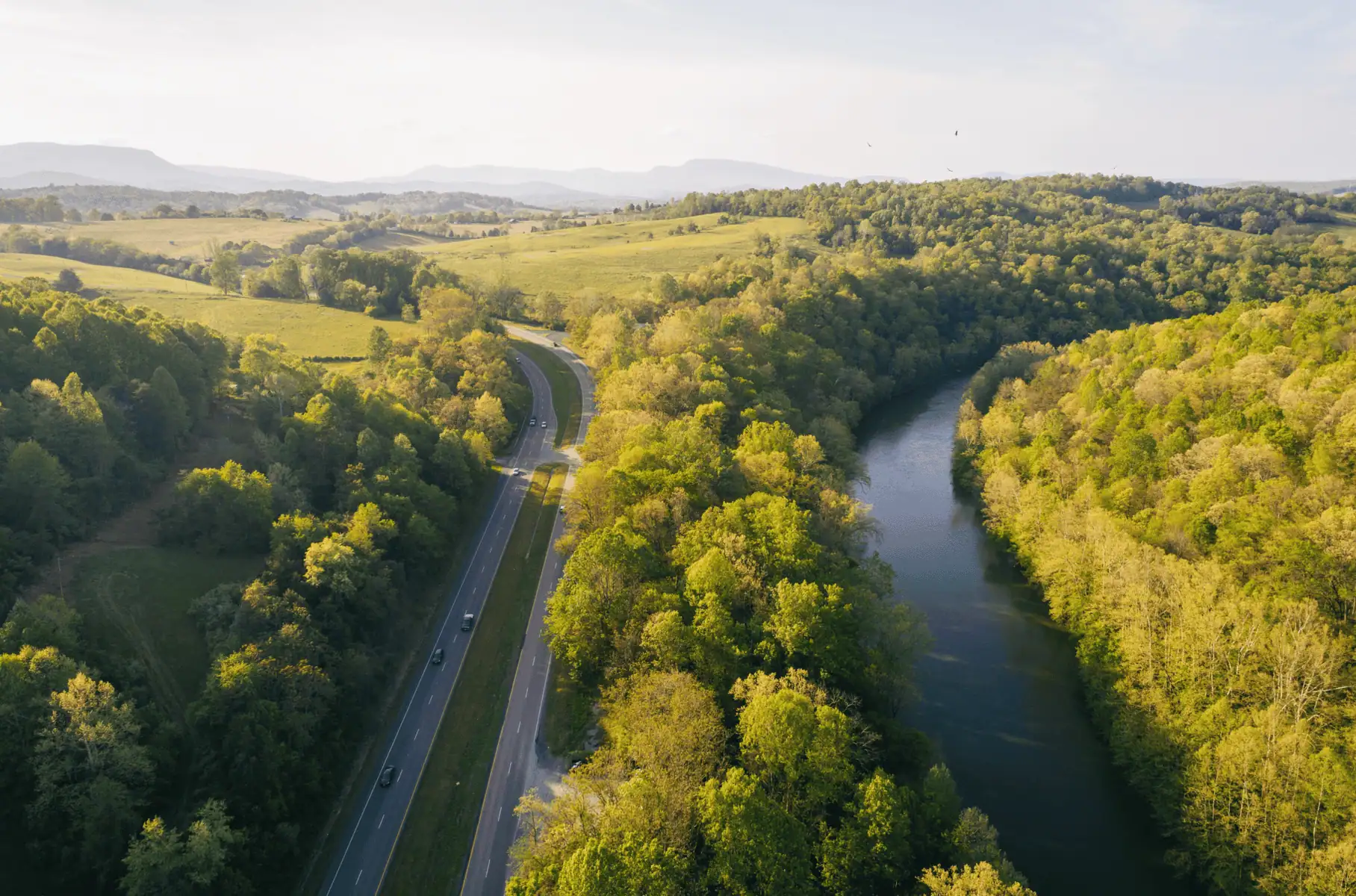
Glen Maury Park is the center; it’s around 300 acres along the river, has two campgrounds, and a couple of bluegrass festivals every summer.
BV is also an Appalachian Trail Community. Thru-hikers can pitch a tent at Glen Maury for $5 a night!
The thing locals love here is the river, the music, and the park. I mean.. who wouldn’t?
12. Waynesboro
This is where Skyline Drive ends and the Blue Ridge Parkway starts. Like many others on my list, the Appalachian Trail also runs through.
There aren’t many road-trip towns in the country that triple-overlap like this.
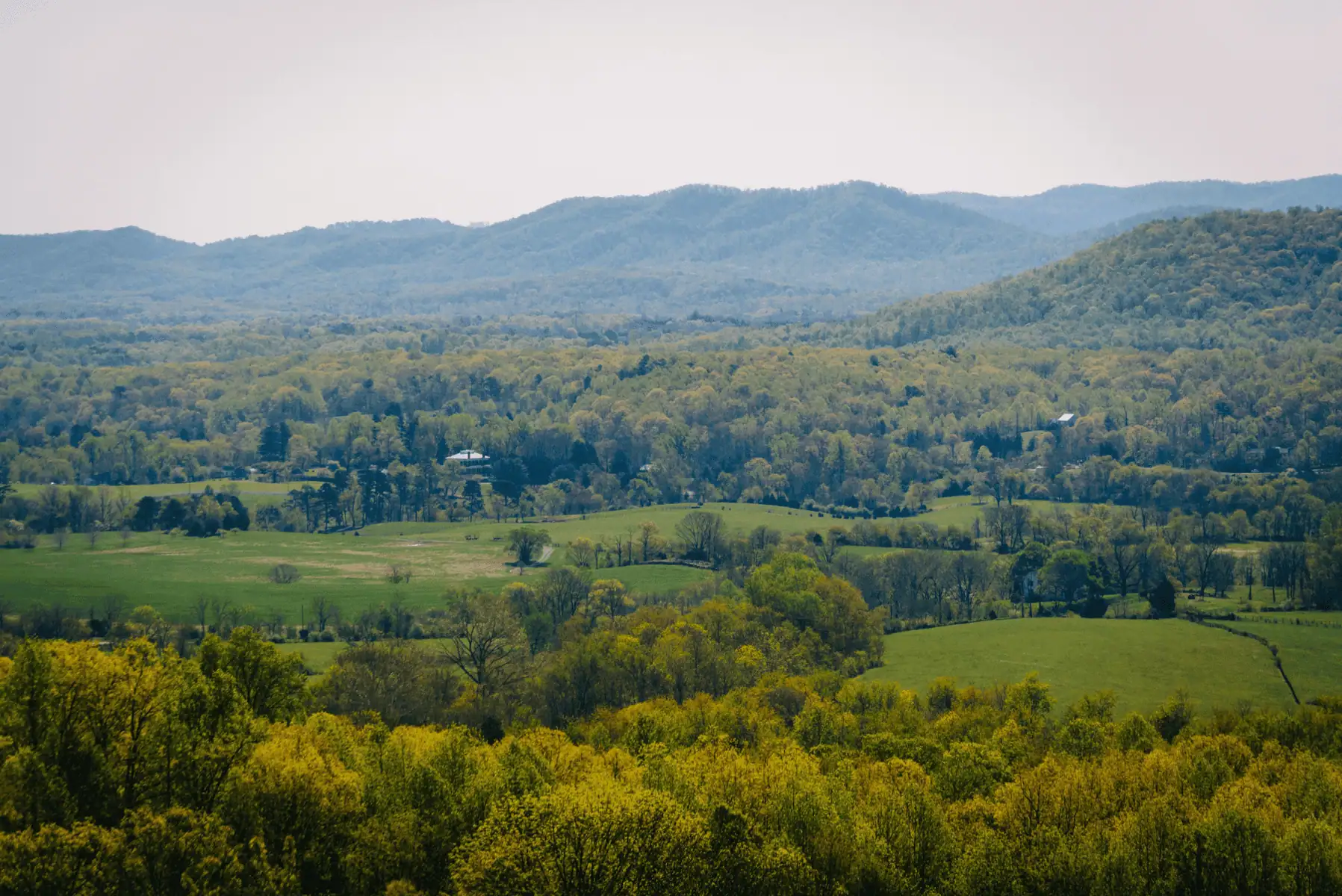
The South River through downtown is one of only two designated urban trout fisheries in Virginia. The catch-and-release section is about two miles long, and accessible behind Main.
If you’re into fishing like we are, just a head’s up.. there’s an old mercury contamination history on this stretch, so it’s catch-and-release for a reason. Don’t eat the fish. I repeat, don’t eat the fish!
You’ll also find three breweries, the restored Wayne Theatre, and a downtown that’s gradually getting covered in murals from the annual Arts Festival.
11. Marion
Mountain Dew was invented in Marion originally as a mixer for whiskey. Fun fact, eh?
The Hartman brothers came up with it in the 1940s. It took several iterations before it became the radioactive (lol) yellow soda the rest of the country knows.
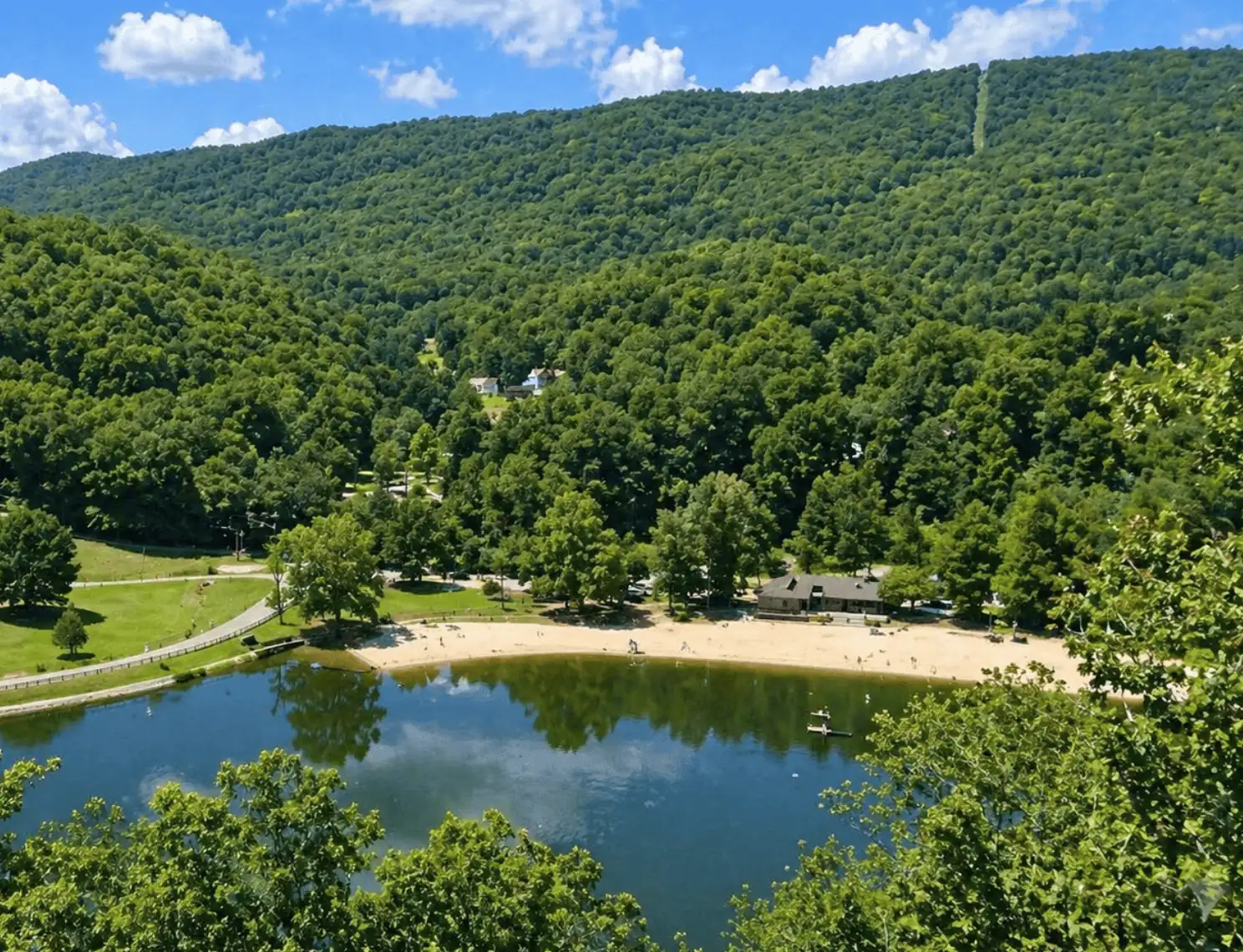
The actual reason most people end up in Marion is Hungry Mother State Park, five miles out of town. There you’ll find a massive lake, sandy swimming beach, and 17 miles of trails. Molly’s Knob is the hike locals will tell you about.
Marion is an interesting road trip stop. Budget Travel even named it America’s Coolest Hometown.
10. Galax
The Old Fiddlers’ Convention has been happening every summer in Galax since 1935.
It’s the oldest and largest fiddlers’ convention on the planet. It features six days of festivities and happens the first full week of August at Felts Park. About 60,000 people pass through because of it.
That’s a lot of fiddles for a town of just 7,000.
Galax also bills itself the World Capital of Old-Time Mountain Music. Some of the first commercial “hillbilly” recordings were made here, which is part of how country music became a genre.
What locals will tell you is that the real magic at the Convention happens in the parking lots. The all-night jams between strangers in the campground are pretty unreal.
We haven’t experienced Galax for ourselves yet, but our travel group insists it’s worth the stop.
9. Wytheville
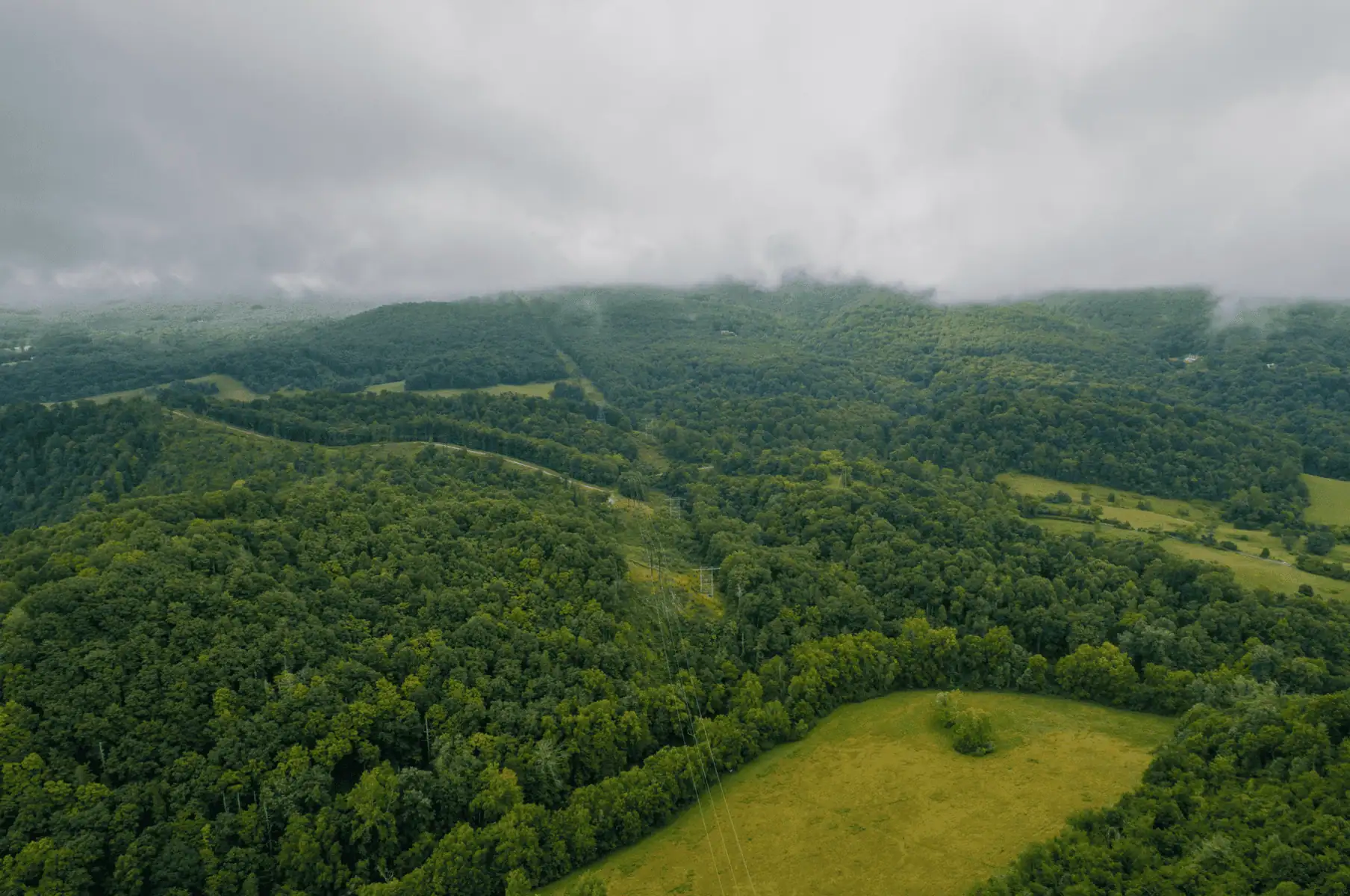
Most people see Wytheville from I-77 and assume there’s not much there. The historic part of town is downtown, away from the highway, which is why it gets dismissed.
A fun fact about Wytheville is that Edith Bolling Wilson, second wife of President Woodrow Wilson, was born here.
Her birthplace is the only First Lady birthplace museum in Virginia.
After Wilson’s stroke in 1919, Edith screened all his correspondence and made decisions on his behalf for over a year. People at the time called her the Secret President.
My favorite part is.. she was a direct descendant of Pocahontas!
For a fun adventure, Big Walker Lookout has an observation tower that’s worth the climb.
8. Luray
Yes, the caverns. Everyone in Virginia knows.
They are the biggest caverns east of the Mississippi, and home to the only stalactite organ in the world. They literally tuned the formations and rigged them to a keyboard.
While most people know about the caverns, very few know the town itself, which is just as awesome.
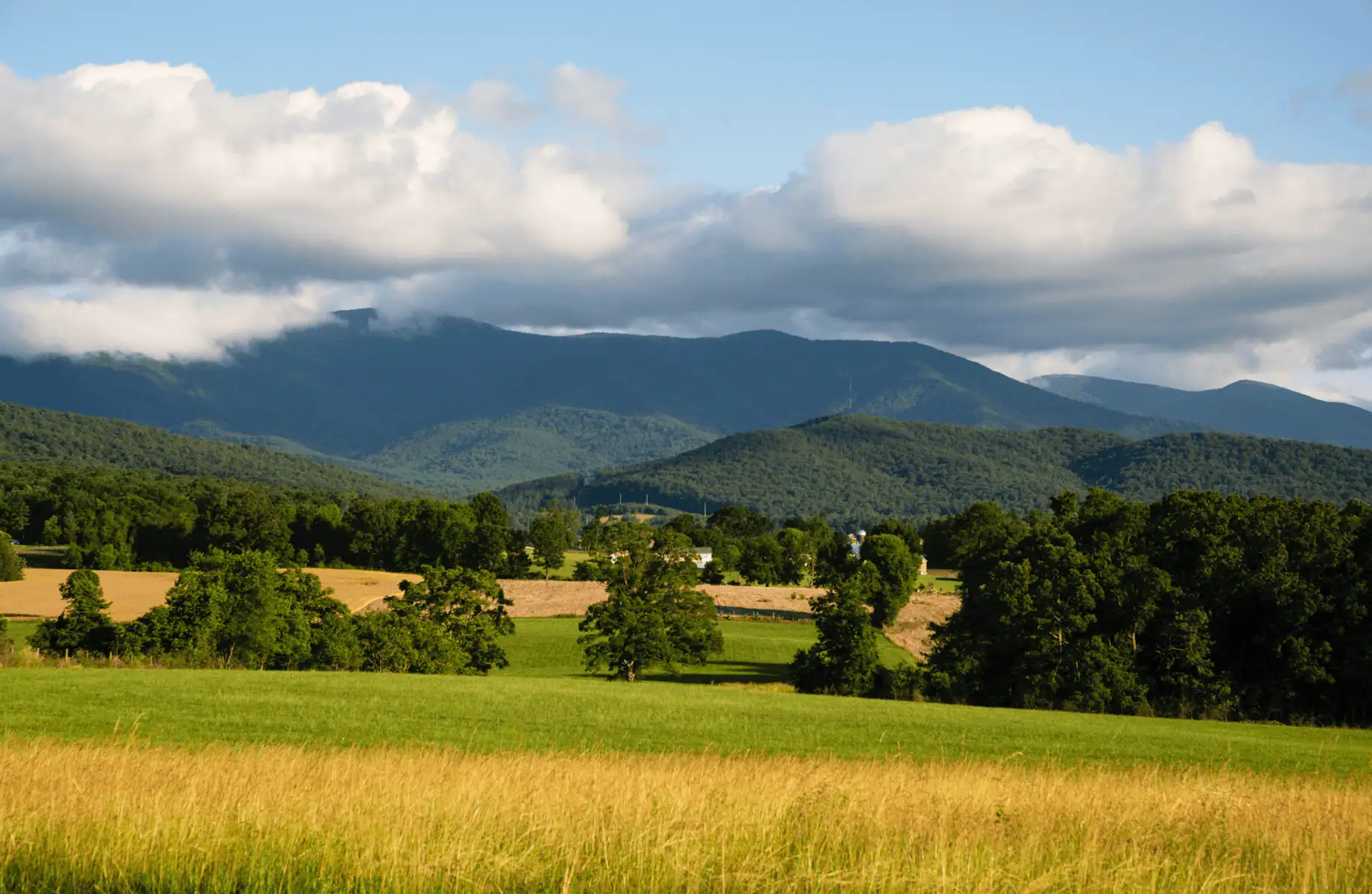
Hawksbill Greenway, a two-mile paved trail, runs through downtown along Hawksbill Creek. It’s lined with benches, herons, and trout. This is where the locals go.
Downtown does the small mountain town thing well. You’ll also be delighted with coffee shops and a town park lake.
There’s also a Dukes of Hazzard memorabilia museum run by the actor who played Cooter on the show, and it’s definitely the oddest stop in town.
7. Front Royal
Virginia officially designated Front Royal the Canoe Capital of Virginia in 1999. The North and South Forks of the Shenandoah meet just outside town.
It’s also the closest national park entrance to D.C. Skyline Drive’s north entrance is at the edge of town, which is about 70 miles from the Capital.
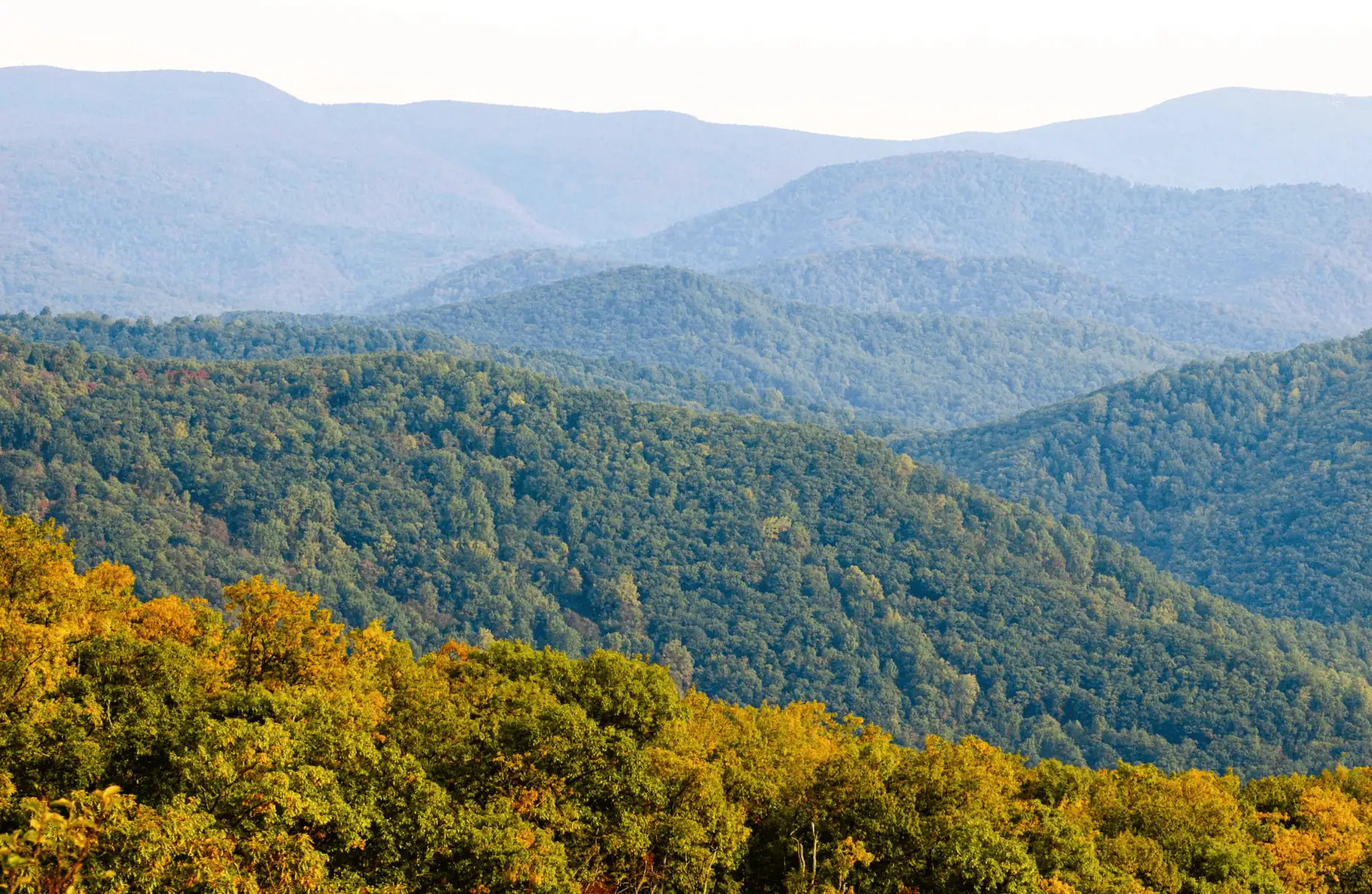
There are three local outfitters in town that do everything from short three-mile floats to 40-mile multi-day trips. And if you’re into fishing, smallmouth bass fishing on the Shenandoah is legitimately good here.
One thing most posts get wrong.. the Skyline Caverns are right in Front Royal. They are not Luray Caverns, it’s a completely different cave.
Don’t mix them up because you might be disappointed!
6. Hot Springs
America’s first resort opened ten years before the Declaration of Independence. It’s the Omni Homestead, which was founded in 1766.
By most counts, 23 or 24 U.S. presidents have stayed there over the centuries.
President William Taft used to summer here for months at a time (to be honest, I would do the same if I was the president HA!).
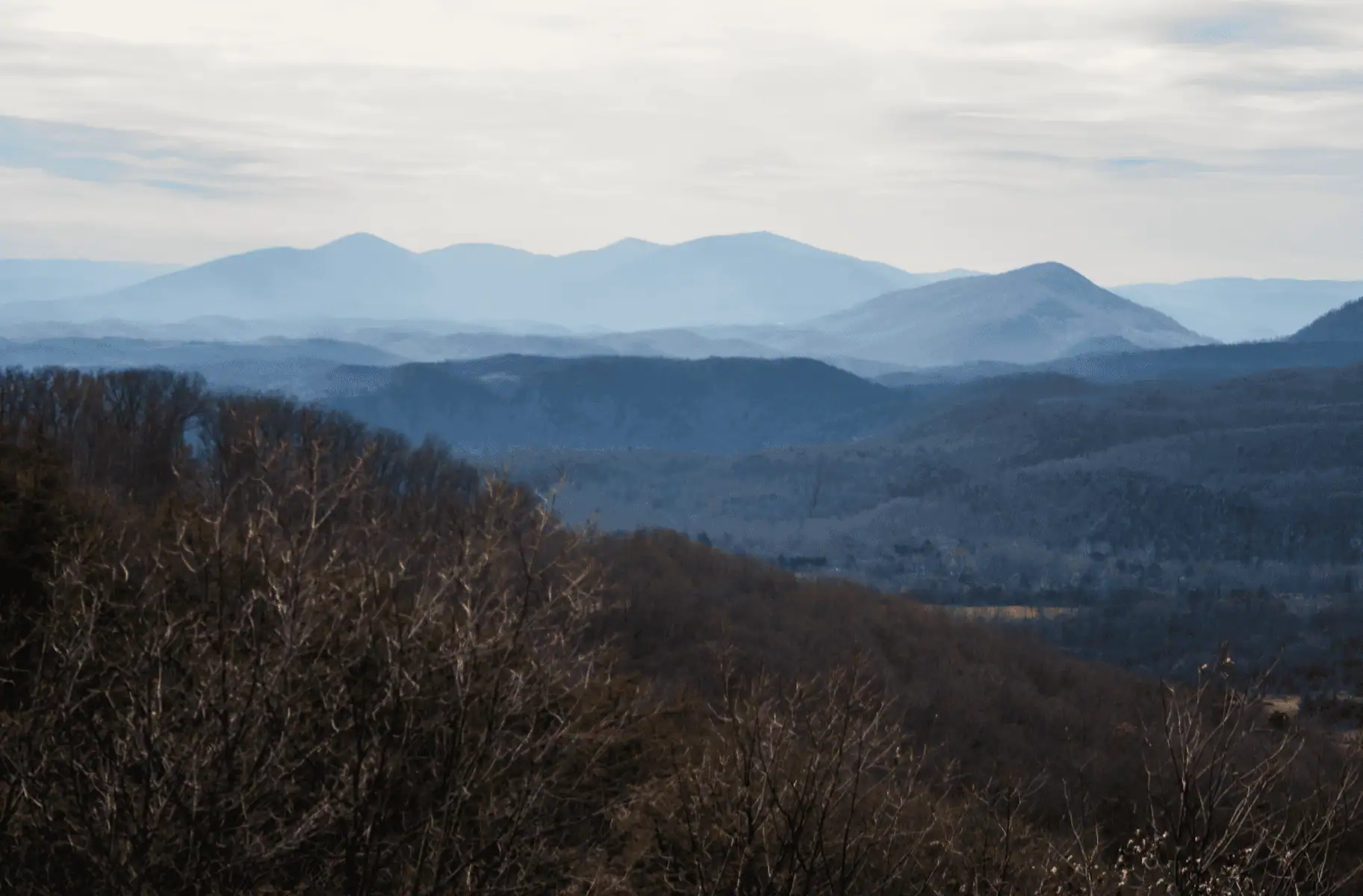
The Homestead just finished a $150+ million renovation in 2023, which means the whole property is freshly redone.
It sits on around 2,300 acres in the Allegheny Mountains. It has two championship golf courses, a spa, indoor and outdoor pools, a lazy river, guided fly fishing, and horseback riding. It also features the oldest ski area in Virginia.
The actual hot springs are five miles north at the Warm Springs Pools, (see #17). Day guests at the Homestead can shuttle up.
This is the one entry on the list where the resort really is the town. Some might fight that, but we think it’s worth mentioning.
5. Lexington
Goshen Pass is about 12 miles west of Lexington, where the Maury River runs through a rocky gorge. There’s a swinging pedestrian bridge, a couple of swimming holes, and picnic tables.
This is where Lexington locals go in the summer.
Five miles outside town is House Mountain, which features twin peaks, the bigger one a little over 3,600 feet. Locals know about the saddle meadow between the two summits where settlers used to keep apple orchards.
Devil’s Marbleyard is a boulder field about 25 minutes from Lexington, and worth visiting.
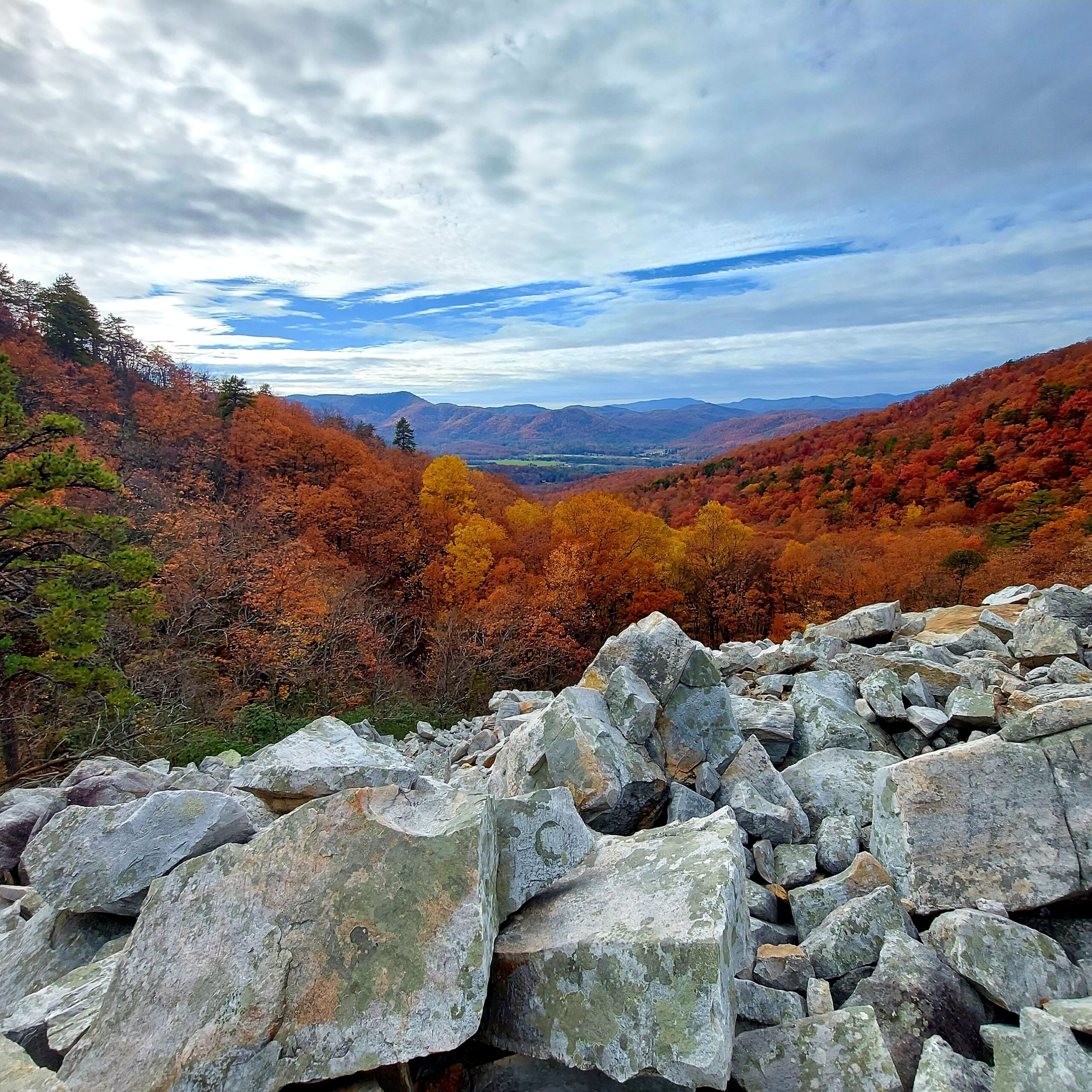
The official trail goes around it because the climb across the boulders is unmarked and dangerous, but you’ll find that locals climb it anyway.
4. Staunton
There’s a recreation of Shakespeare’s indoor theater in Staunton, which is the only one in the world!
Blackfriars Playhouse was built in 2001 by the American Shakespeare Center. The original Blackfriars in London burned in the 1666 fire and no architectural plans of it ever survived. It took years of research to figure out what it would have looked like.
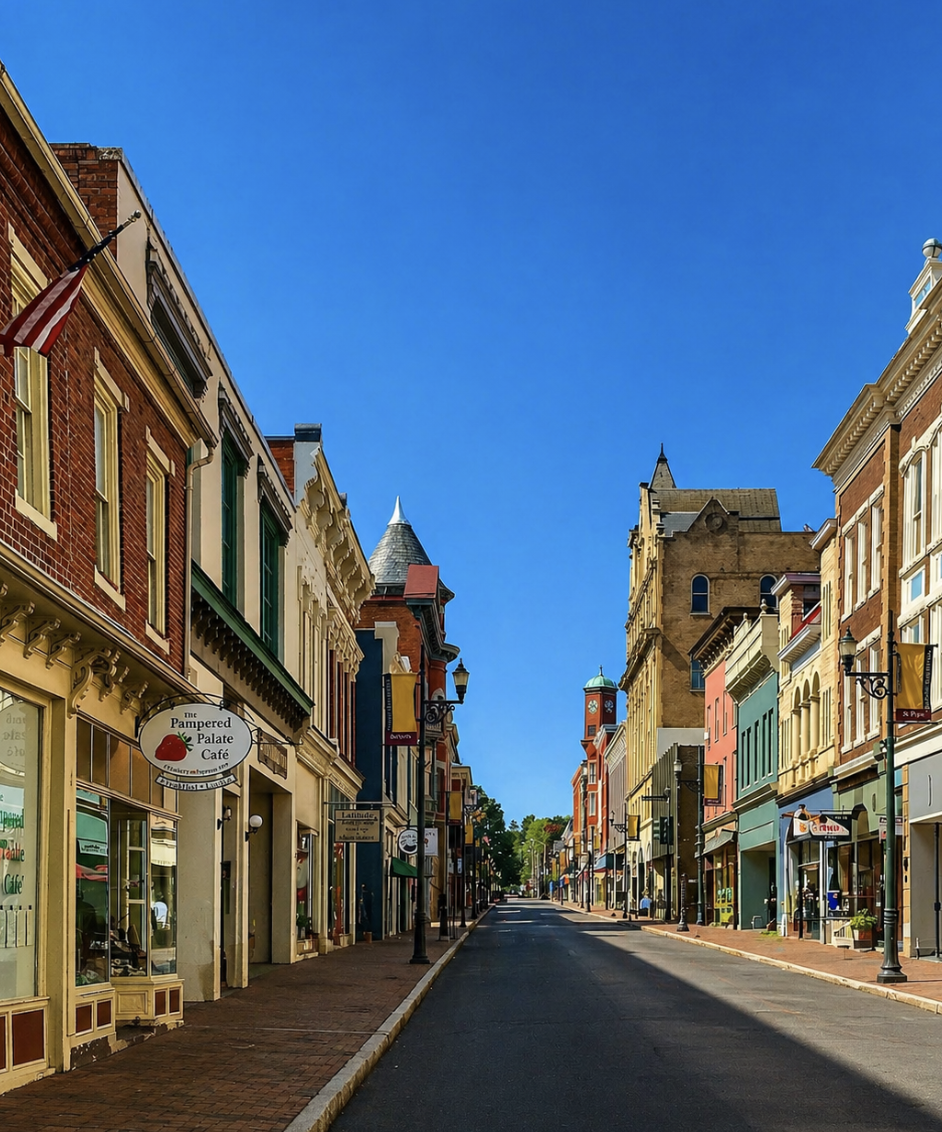
The Frontier Culture Museum is the other anchor of Staunton. It features eight working farms, each one reconstructed from its home country. Real farmhouses were brought over from Germany, England, Northern Ireland, West Africa, plus a couple of historic Virginia ones.
Staunton is also Woodrow Wilson’s birthplace, with multiple “best Main Street in America” rankings to its name.
Some posts argue Staunton is more valley than mountain, but mountains are visible in every direction here, so we think it counts.
3. Abingdon
Barter Theatre opened in the middle of the Great Depression, when the founder figured no one had cash for tickets but everyone had a chicken or a jar of jam to swap. Actors literally took produce in exchange for admission.
It’s now the State Theatre of Virginia, and one of the longest continuously running professional regional theaters in the country.
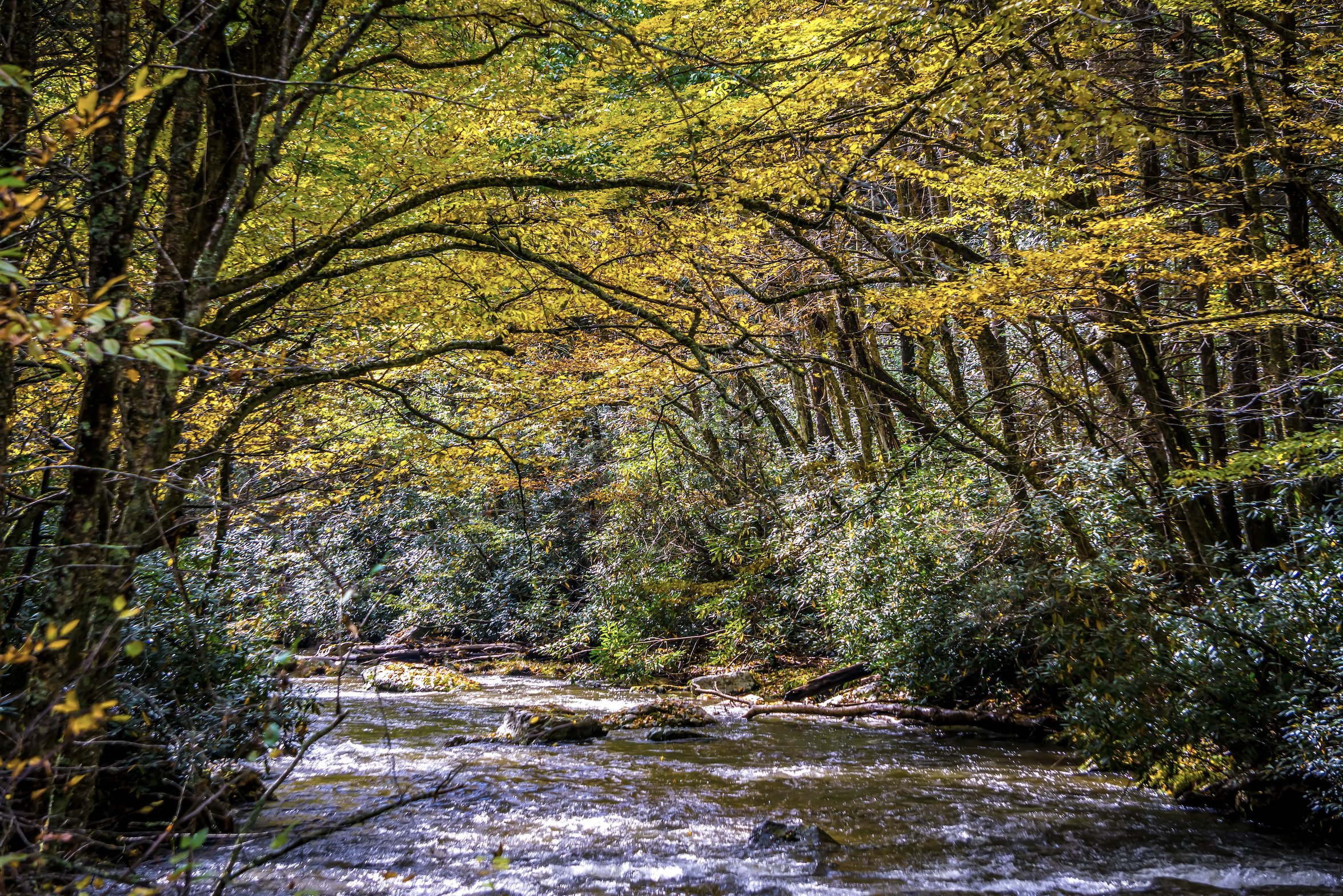
Across the street from the theater is the Martha Washington Inn. It was also a women’s college, then a Civil War hospital, and now a resort with a spa.
The Virginia Creeper Trail’s western trailhead is in Abingdon. Hurricane Helene damaged the upper section in September 2024 and the Damascus-to-Whitetop part is closed for the 2026 season. A huge bummer.
The Abingdon-to-Damascus stretch, about 17 miles, is open and rideable. Don’t trust any post that says the whole trail is fine right now because it’s not.
2. Damascus
The Appalachian Trail crosses the sidewalk on Main Street! The trail runs through town for about three quarters of a mile, past the bakery and the outfitters.
There are only three towns on the entire 2,200-mile trail where this happens. Hot Springs, North Carolina, and Hanover, New Hampshire, are the others. Damascus is the most concentrated of the three.
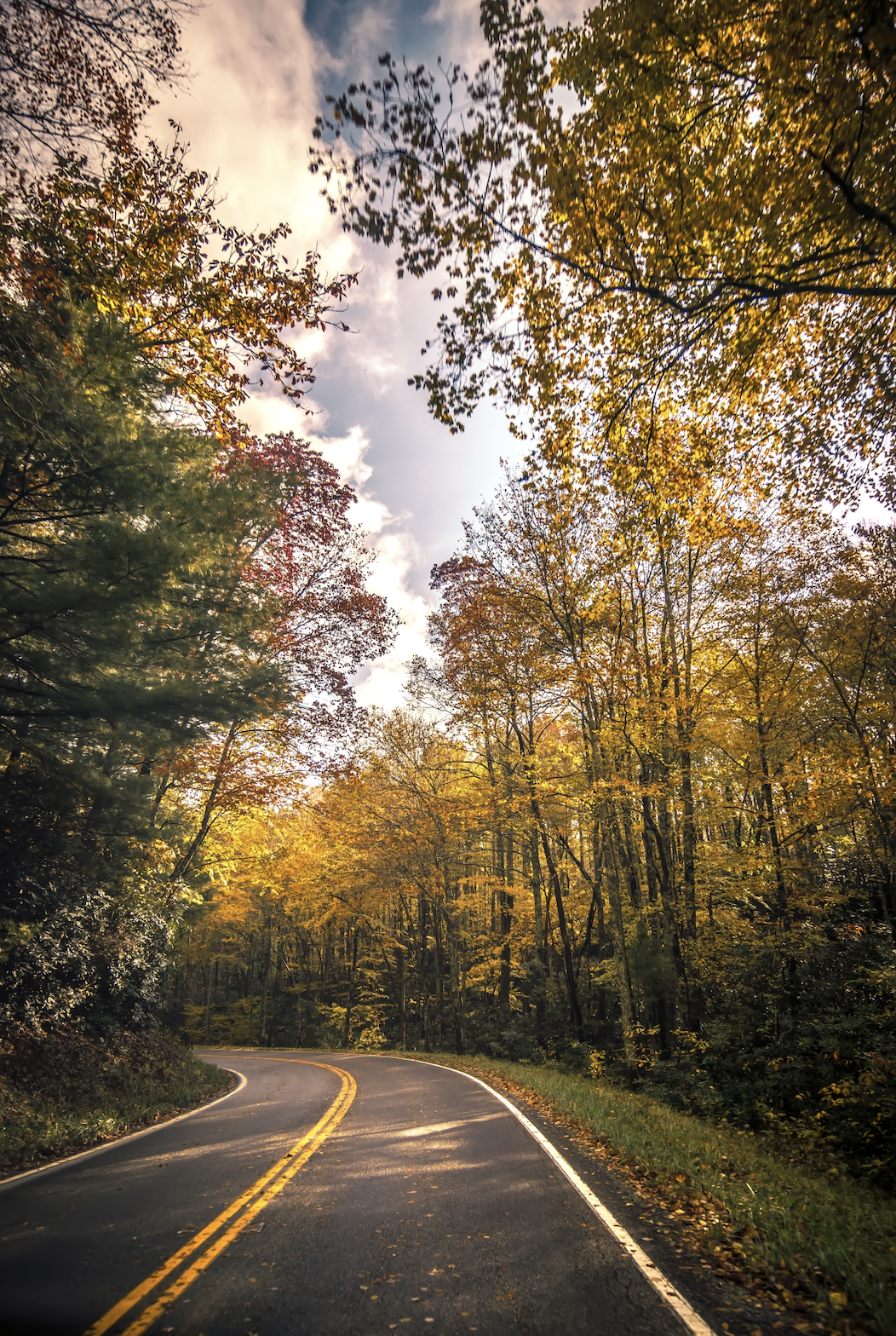
Trail Days happens every May, and has been running since 1987.
The town’s population is around 650. During Trail Days it swells to 20,000 to 25,000 hikers, past and present.
The Saturday Hiker Parade is the centerpiece with water balloons, costumes, and thru-hikers marching together.
Damascus is the eastern terminus of the Virginia Creeper Trail too. Not that the same Hurricane Helene situation is applicable here as Abingdon. The upper section toward Whitetop is closed for 2026. The rebuild is expected to wrap up later this year. Damascus-to-Abingdon is open.
1. Floyd
Friday nights at the Floyd Country Store have been happening since the early 1980s.
It started informally; one of the previous owners kept the store open Friday nights so some friends could practice old-time string band music.
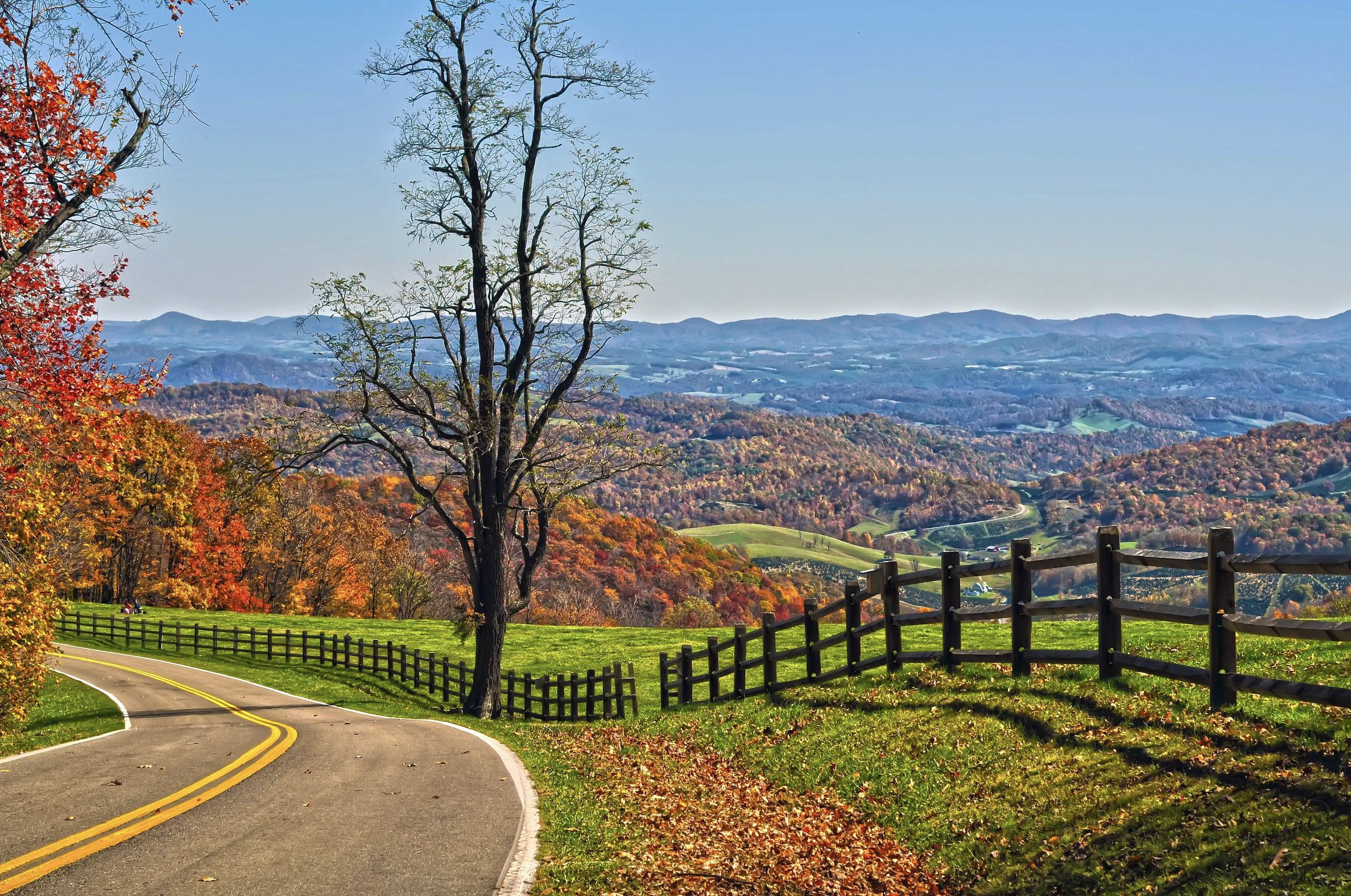
People started coming in to listen, and then many joined in to play.
Eventually the floor cleared for flatfoot dancing and they gave it a name: Friday Night Jamboree.
It’s now 6:30 PM every Friday, all year round, and its $10 at the door. It’s often standing room only.
Floyd has about 450 residents. There’s one stoplight in the whole town, and it sits at 2,500 feet on the Blue Ridge Plateau, with the Parkway running just south.
The Handmade Music School at the store teaches old-time and bluegrass directly from local masters. But Friday is the night.
Floyd is one of the very last places in the country where mountain music tradition is still alive in its original community context.
The best part is that it’s not curated or staged for tourists. It’s just Floyd!
That’s why it’s #1.
Honestly, none of these towns are trying to be on a list.
Most of them have had their own thing going for centuries and they weren’t built for tourists.
You don’t need to see all twenty, but pick the two or three that seem really cool to you and put them on the calendar before life gets in the way again.
