25 Things The Cruise Stewards Aren’t Telling You About Your Cruise Cabin
Mike and Laura Travel contains affiliate links and is a member of the Amazon Services LLC Associates Program. If you make a purchase using one of our links, I may receive compensation at no extra cost to you.
Most people spend weeks researching cruise itineraries and rarely stop to think about the room they’re getting.

And that’s understandable.. the ports are definitely more exciting, and you’ll want to plan around them.
But your cabin is also important, and believe it or not, your the cruise stewards know a lot more about your cabins than they make you believe.
Some things they know could help you improve your trip, and other things they know might make you go “eeek!”
And while they could stop and inform every passenger, it’s silly to think they have the time for that, especially on embarkation day. The average cabin steward has 20 or more rooms to get to before the ship leaves port.

Since we have several friends that work on cruise ships, I asked them for their best tips and experiences. Here’s what they told me:
25. Your Cabin Has More Storage Than You Think
The space under the bed on most cruise ships is substantial, and most passengers never use it or don’t know it exists.

Some ships have pull-out drawers where you can put your clothes, and other ships have enough room under the bed to slide in luggage, which will open up the closet for more of your clothes.
Other places to look for storage include:
- The shelf above the closet rod
- The cabinet under the bathroom sink
- Any ledge space above the bed
Take a quick look around when you first get to your room, and you’ll find your cabin is a lot more functional than it seems at first. Or at least that’s true for most cruise cabins (I can’t speak for them all).
Tip: These are our favorite hooks; the strongest we’ve found so far!

24. Interior Cabins Are Better for Sleeping Than You’d Expect
If you care about sleeping in (proudly raises my hand), interior cabins have a huge advantage over balcony and oceanview rooms because it’s completely blacked out.
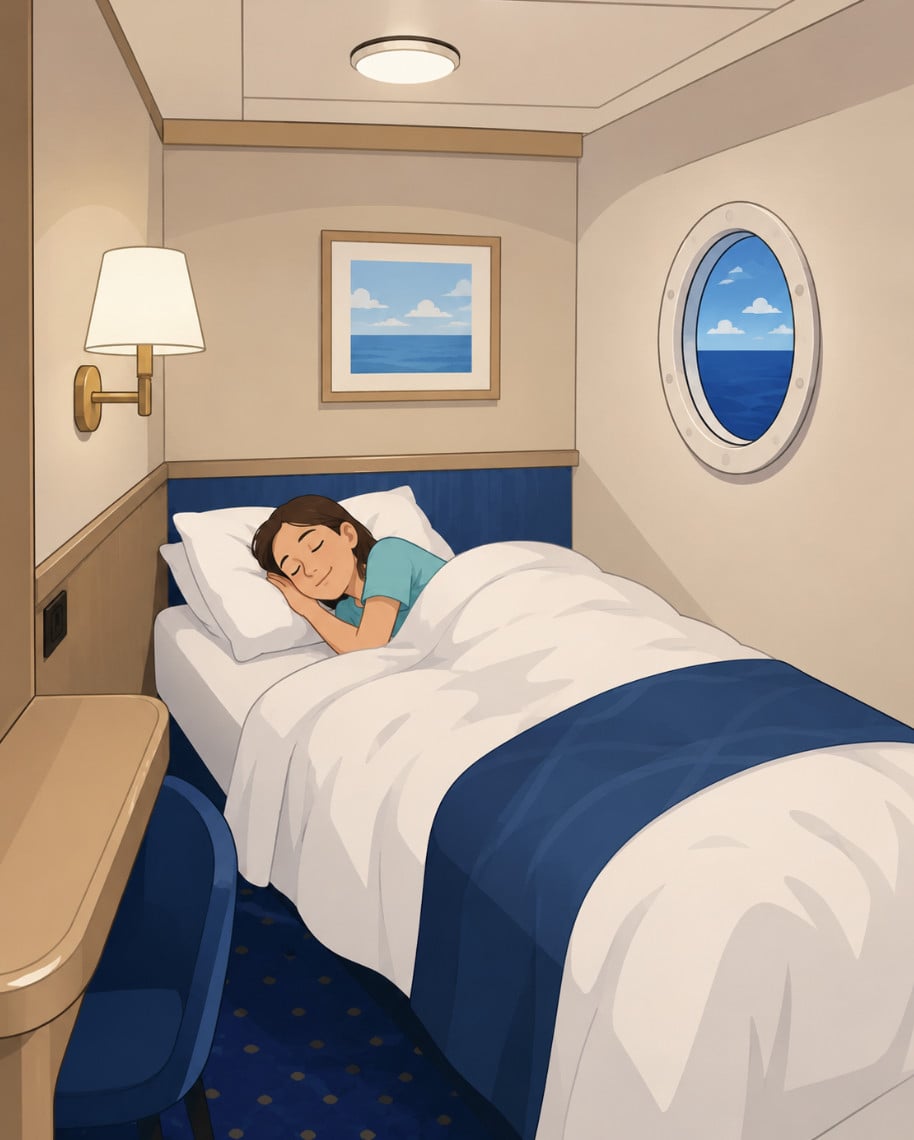
Oceanview and balcony cabins let light through whether that’s from sunrise on the port side, dock lights overnight, or port activity when you’re trying to take a little siesta.
Interior cabins have no windows, which means you won’t have light filtering in until your alarm goes off in the morning.
I used to think how silly booking an interior room would be for a cruise until I realize that experienced cruisers book them for a reason. Touche!
Not to mention, the price is usually lower, which makes this an easy call if you’re on a budget.
Quick Tip: If you decide on an interior room, grab a pack of nightlights on Amazon. Or just leave the bathroom light on with the door cracked. Either way, take care of it early on in your trip or you’ll be stubbing your toe into furniture at 2am.

23. Most Cruise Lines Have a Pillow Menu
This is my favorite part because pillows mean a lot to me; I get headaches from bulky pillows, and once I realized that a lot of accommodations, including cruises will cater to your pillow preferences, my entire world changed for the better.
Not every line advertises it, and it’s primarily available in suites and concierge-level cabins.

But a lot of major cruise lines (Celebrity, Norwegian, Disney, etc.) have pillow options like feather, memory foam, body pillow, and hypoallergenic fill.
Even in a standard cabin, most stewards can track down a different pillow type if you ask, and the worst they can say is no.
📌 Read Next: Cruise Lines For Families, Ranked
22. The Balcony Divider Between Adjacent Cabins Can Be Opened
If you’re a family booking two side-by-side balcony cabins, this is almost always an option for you.
Your steward can open the divider between the two balconies and connect the outdoor spaces into one!
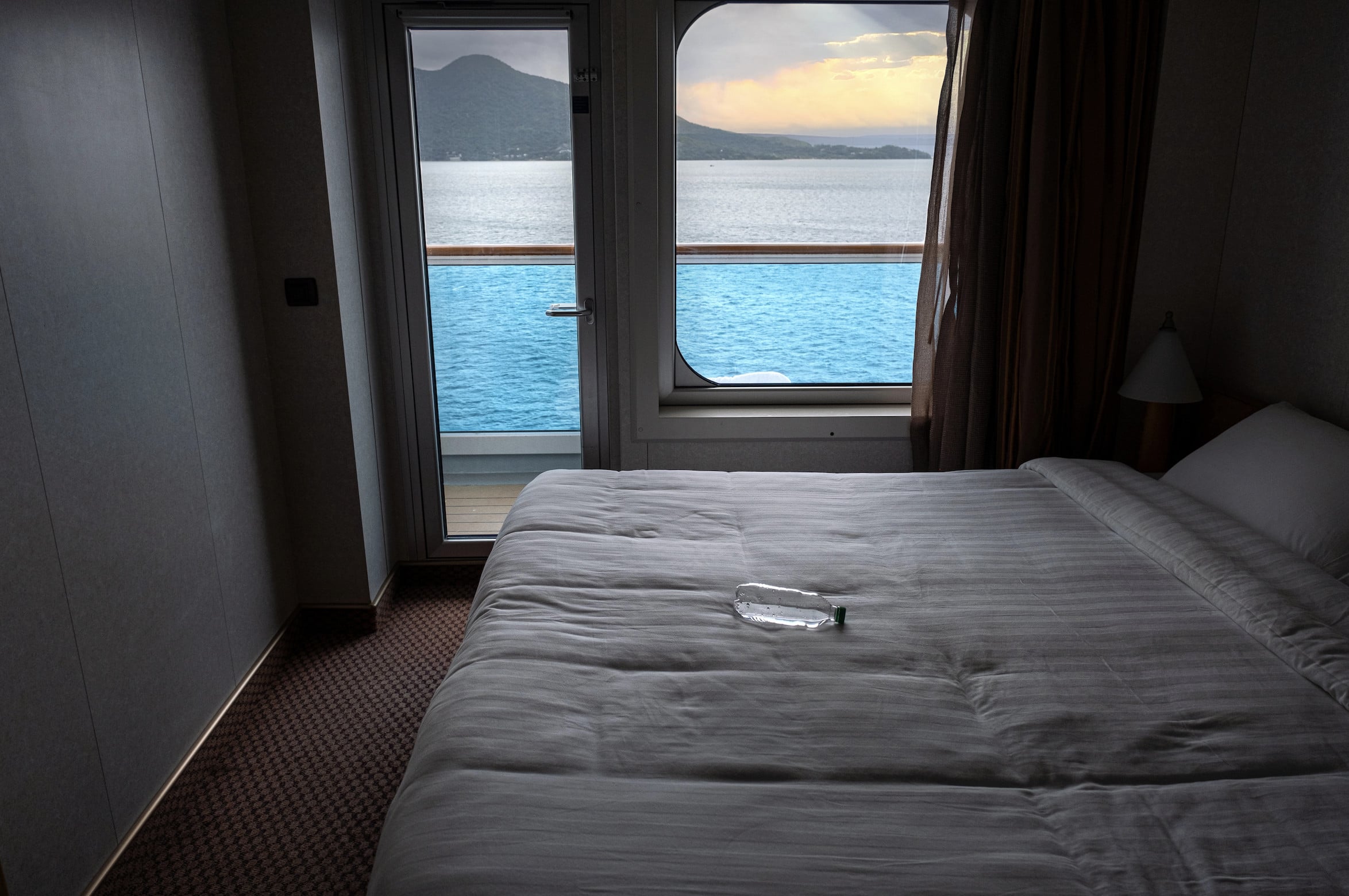
It doesn’t work on every ship, of course. Some older ships and certain Royal Caribbean ship classes have partitions that are fixed and can’t be removed.
But on most modern ships, you should definitely ask. It only takes a few minutes for stewards to set up.
Again, this isn’t really something they advertise, so make sure you take initiate to ask for your group.
✈️ Planning a trip? Let us do it for you. Click here!
21. Your Steward Has Your Daily Routine Figured Out Early
Cabin stewards manage 20 or more rooms every day, and they do it by learning their passengers.
By the second day, most stewards have an understanding of when each cabin’s guests wake up, when they leave, and return.

If you want your cabin cleaned early, leave early and be consistent.
If you need it done before dinner, be out by early afternoon. The queue is built around behavior. You have more control over your service timing than you probably realize, and it just takes being aware of your own actions on the ship.
📌 Read More: How To Thousands of Dollars On Travel (so you can travel more!)
20. Extension Cords Are Banned, But There’s a Workaround
Every major cruise line prohibits personal extension cords as a fire safety measure, and it makes sense. I’d hate to be on a ship that caught fire. And this is a rule they really enforce.

What most passengers don’t know is that Guest Services on many ships keep a small supply of cruise-approved surge protectors available to borrow, but you have to know to ask.
Stop by Guest Services on embarkation day before they run out. These typically go quickly, so jump on the opportunity or bring your own. I linked my recommendation below.
Here’s our favorite recommendation to get before your trip: Anker Zolo USB C Charger Block

19. The Thermostat Works, Just Not Like You’d Expect
Most cruise ship cabins have a thermostat and it does do something, but not what you’d think it controls.
It controls fan speed and cooling mode, but not the temperature of the air flowing into your room.

The base temperature comes from the ship’s central HVAC system, and it varies by deck and section. If your cabin is feeling warm, adjusting the dial doesn’t really do much for you but a small burst of wind. Mike, in particular, hates this as he’s always hot.
Therefore, it’s worth calling Guest Services to report it as a ventilation issue. They can sometimes make adjustments that you personally can’t.
18. The CDC Grades Your Ship and Posts the Score Online
The CDC’s Vessel Sanitation Program manages inspections of cruise ships twice per year. Scoring is on a 100-point scale; a score of 85 or below is considered failing.

All scores and full inspection reports are available to see on the CDC’s website. Most passengers have no idea these records exist before they book, so it’s worth looking up before your next sailing.
17. Prescription-Strength Motion Sickness Help Is Available on the Ship
Mike gets seasick often, but we didn’t think he would feel sick on a massive ship. But alas, we were wrong.
If you’re like Mike, know that cruise ships often offer over-the-counter options for seasickness. These may work for some people, but may not work for others.
In particular, the ship’s medical center can prescribe options like scopolamine patches. These tend to outperform Dramamine for many people.

There is a cost involved since the medical center isn’t free. Bummer, I know.
But for someone who is miserable in their cabin because the sea is rough that day, knowing this option exists is important.
Quick Tip: Grab some motion sickness patches here, and throw in some Dramamine, too.
16. The Do Not Disturb Sign Has a Time Limit
On most major cruise lines, the Do Not Disturb setting isn’t really unlimited.
If it stays on continuously for an extended period (roughly 24 hours, though the exact timing will vary by cruise line), crew members are required to perform a welfare check on the cabin regardless of the do not disturb sign.

This is a safety protocol. Medical emergencies happen at sea, and ships are required to have procedures like this. Don’t be offended.
This is obviously worth knowing if you’re planning a sick day in the cabin or skipping/sleeping through a port.
15. Stewards Know Which Cabins Are Noisy.
There are specific locations on every ship with predictable and persistent noise problems. The cabin directly under the pool deck gets chair-scraping and foot traffic starting before the pool even opens.
Cabins next to the elevators hear it go up and down throughout the night.

And rooms near the anchor chain room get a wake-up call at every port arrival. Stewards know this about their section of cabins.
If you’re in a cabin and something sounds off, ask your steward about your location and what you can expect. A good steward will often tell you what to expect, and sometimes what you’ll need to avoid issues (usually earplugs, which you should bring anyway, just in case).
✈️ Planning a trip? Let us do it for you. Click here!14. Port Days Are the Busiest Days for Cabin Stewards
A common assumption is that when passengers head to a port for excursions, the crew gets a break. Ehhhh. Wrong.

The opposite is usually true. Port days and turnaround days, when passengers disembark and a new group boards, are often the busiest of the week.
Most cabin stewards do have some access to shore leave during a contract, but it’s dictated by staffing rules, visa requirements in US ports, and timing of their cleaning cycles.
Although it would be nice for the crew to get to explore destinations alongside passengers, it just isn’t reality for most of the housekeeping staff.
Pro-Tip: Order Lanyards now so you don’t forget
These are the ones you want. These have a clear plastic sleeve so crew can scan through them. They also have a breakaway clasp so it doesn’t become a hazard, and they come in multi-packs so everyone in your family can have one.

>> Click here to grab your lanyards
13. You Can Request Things That Never Appear on Any Menu
Most guests don’t realize their steward can bring them things that aren’t on menus or listed on their website.
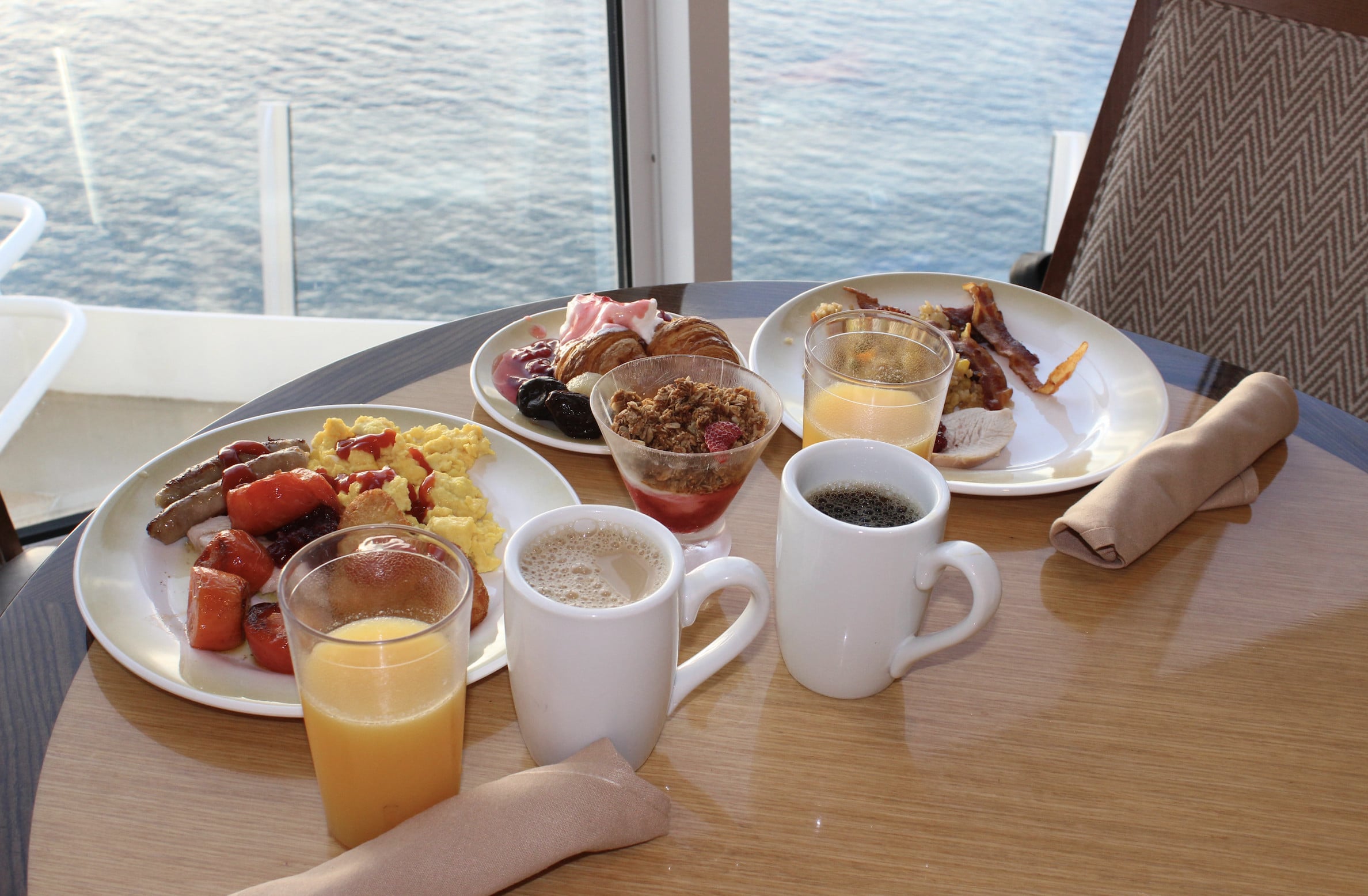
Things like:
- Extra hangers
- An egg crate mattress topper if the bed is too firm
- Ice bucket refills on demand
- Extra robes and towels
- A different pillow type (mentioned above because I love the right pillow)
- An empty fridge with minibar items moved to storage (more on why that last one matters in #2).
And none of it costs anything (typically)!
But your steward won’t tell you these things. You’ll need to ask, and I recommend asking on the first day so you get priority. Be specific about what you want, too.
In my experience hearing from frequent cruisers, this is the most consistently underused tip on the whole list.
12. Balcony Cushions Aren’t Always Cleaned Between Sailings
I’m a germ freak, so this one kind of weirds me out. The hard surfaces on your balcony (railing, table, chair frames) get wiped down during turnaround.
The fabric cushions on balcony chairs and loungers typically don’t. That’s fine for some people, but I am certainly aware of this.
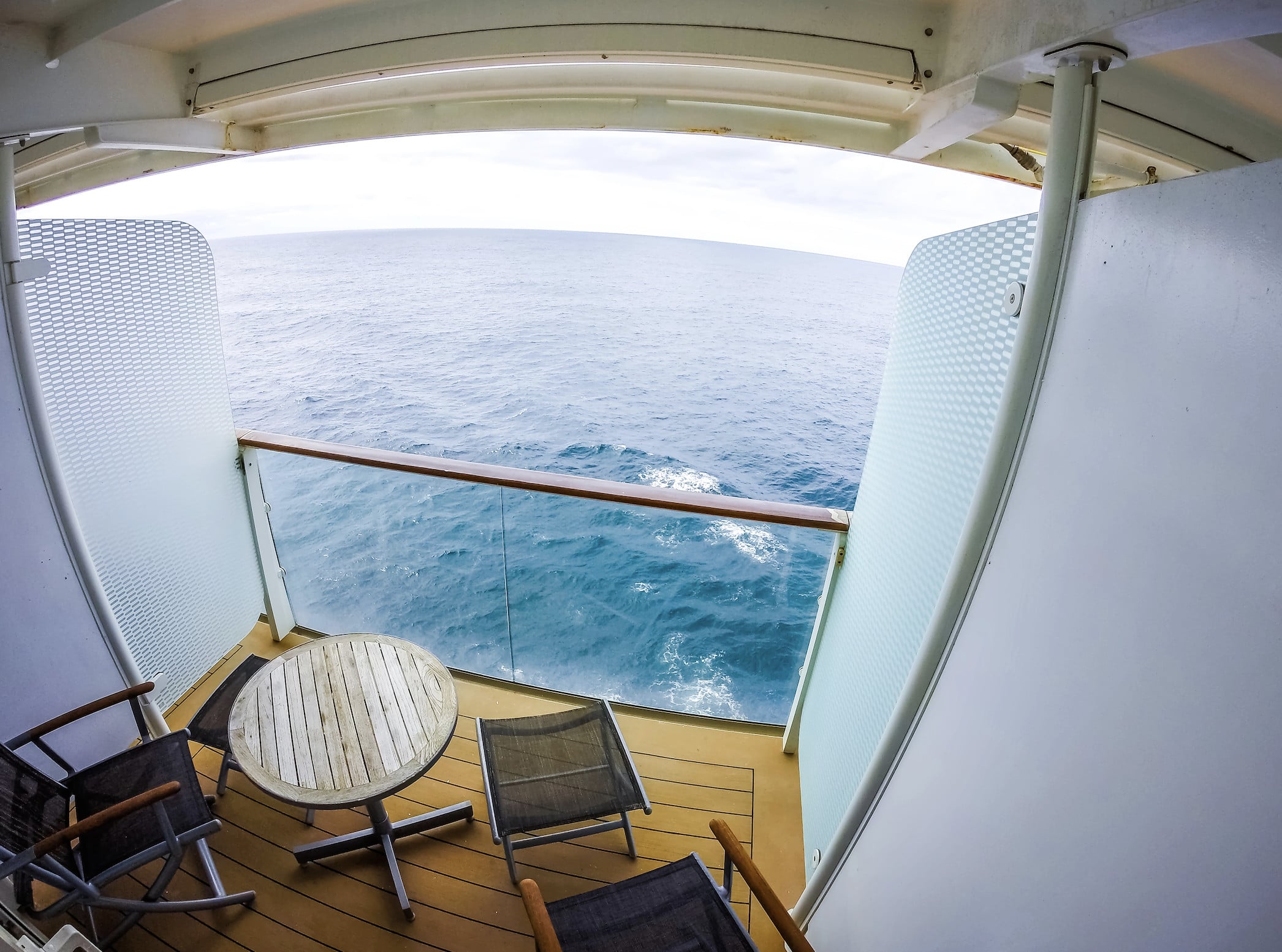
Essentially, on quick turnarounds between sailings, it doesn’t happen consistently, so if it matters to you, it’s a fair question to ask your steward when you board.
PSSST! WANT FREE PERKS ON YOUR NEXT CRUISE?
Planning a trip isn’t always the fun part 😉 If you’d rather have a travel expert handle the details, AND get free perks on your next cruise, we’re happy to help!
We’ve been traveling full-time since 2014 and can help you book your trip for free.
>> Click here to tell us about your cruise!
11. The Mattress Pad Cover Gets Washed, but the Fill Inside Doesn’t
Your cruise bed almost certainly has a mattress topper on it. The outer cover gets washed or cleaned between each sailing, as well as the sheets and pillowcases.
But the foam inside the topper typically doesn’t, and the mattress underneath it doesn’t either. That doesn’t mean they NEVER clean them, but it certainly doesn’t happen between each guest.
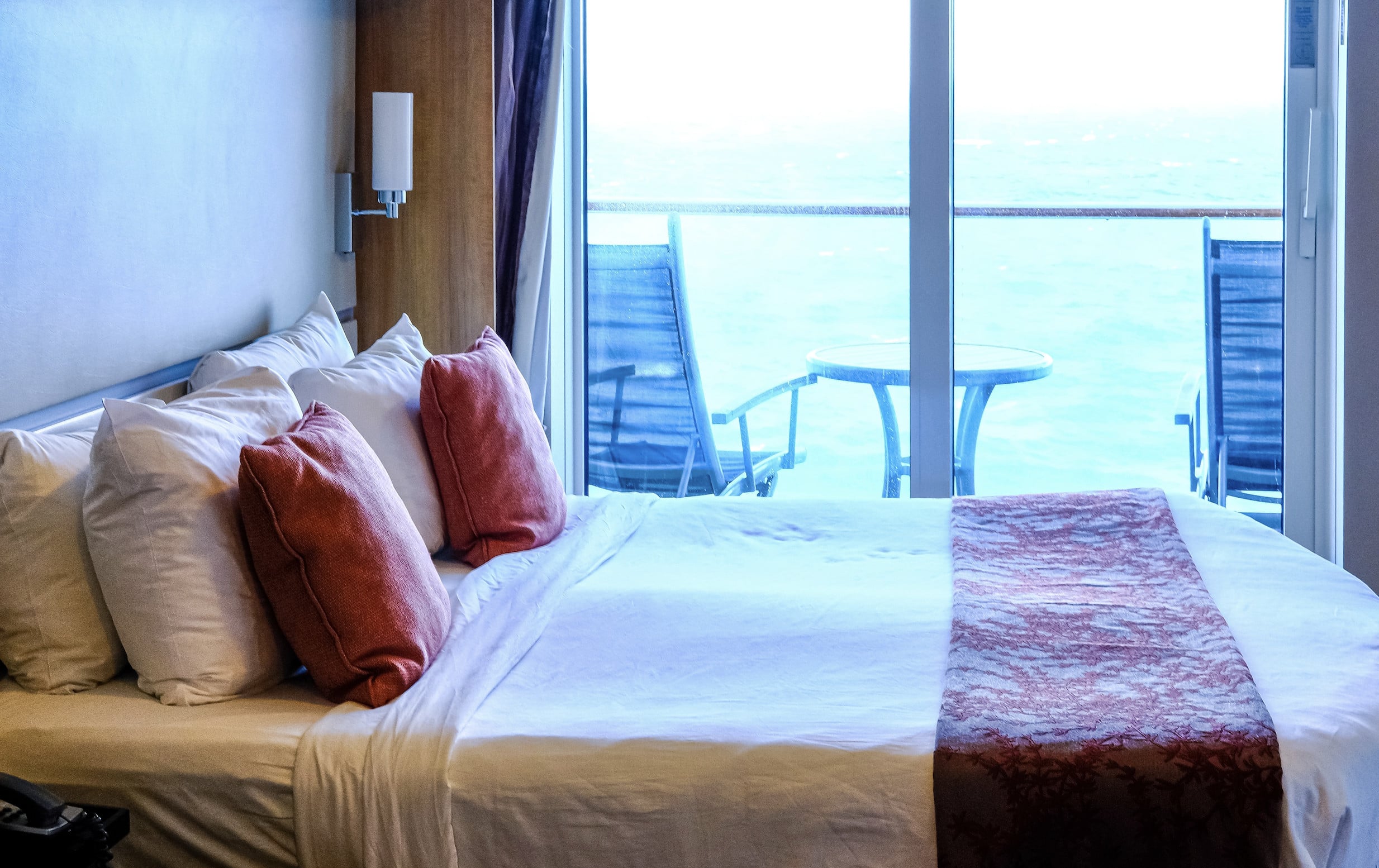
That said, this is standard practice across the hospitality industry, not just specific to cruise ships. Among frequent cruisers, bringing a sleeping bag liner is a common practice.
10. Your Steward Is Cleaning 20+ Cabins, often Twice a Day
On ships with twice-daily service, a cabin steward is responsible for around 20 cabins for the morning clean and the same 20 for evening turndown.
That’s up to 40 service runs per day, seven days a week. On ships that shifted to once-daily service, the cabin count moved up to around 24.
That is a LOT of cabins, and it’s worth keeping in mind.
The fact that your room looks put-together when you return from dinner is the result of someone moving very quickly through a very long list of rooms. Treat your steward with kindness, and say thank you when you see them!
9. There May Be an Empty Cabin Right Next to Yours
No-shows and last-minute cancellations happen a lot on cruises. That means passengers in noisier or smaller rooms aren’t technically stuck in their room. If you don’t like where you’re staying, it’s worth asking if there’s another room option.
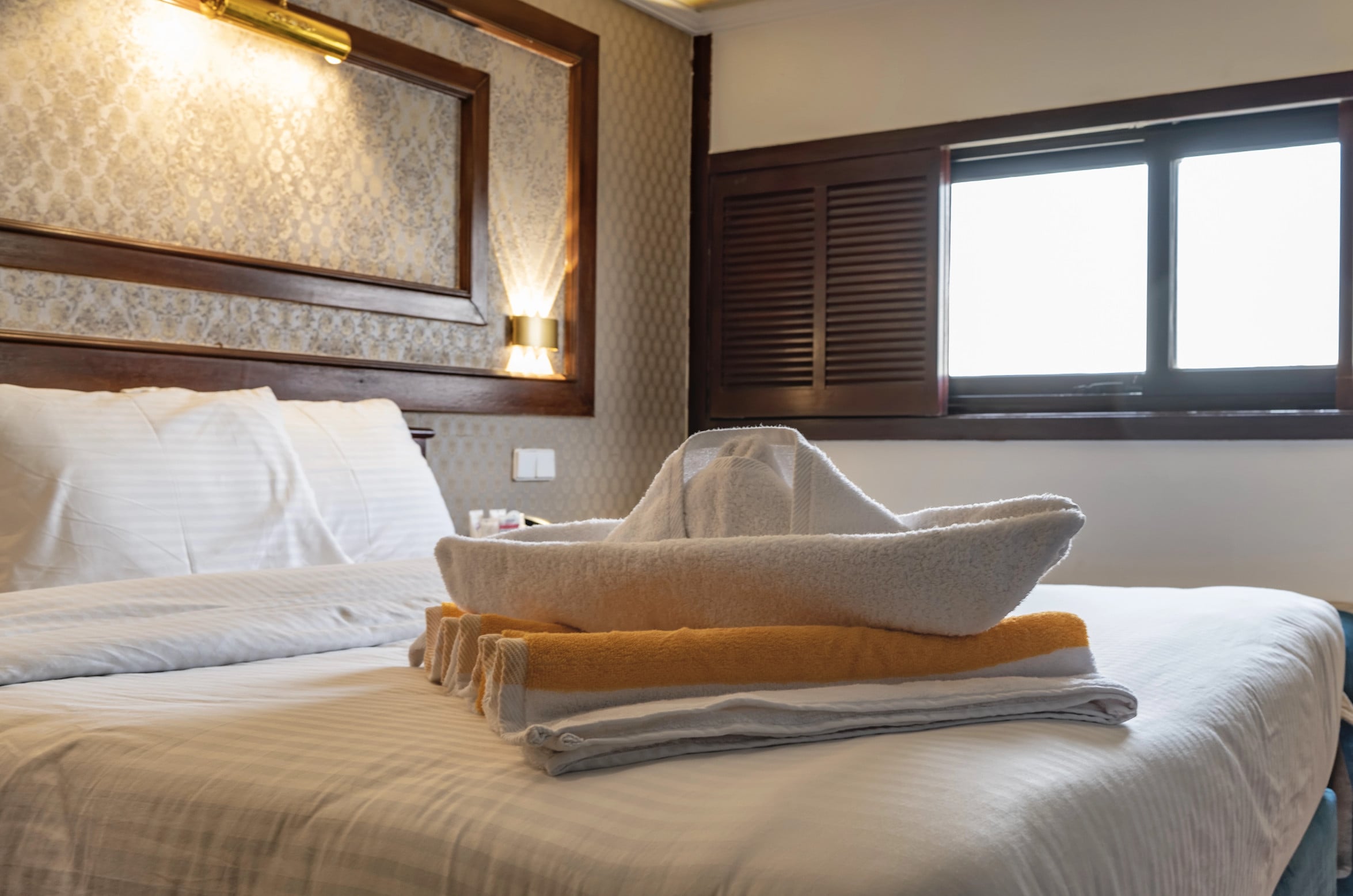
Embarkation day is the best time to ask Guest Services about an upgrade or switch. The ship has the most flexibility before it leaves.
Costs range from free to a small fee depending on what’s available and the cruise line’s policies.
It doesn’t always work, of course, but it works often enough that asking is worth it.
8. The Auto-Gratuity Isn’t Just Going to Your Cabin Steward
The daily auto-gratuity that most cruise lines add to your onboard account gets pooled and distributed across multiple crew categories, so it’s not only the person cleaning your cabin.
Celebrity Cruise’s housekeeping receives around 29% of the standard stateroom gratuity amount.

That means your cabin steward gets a fraction of the daily total, and not the full figure. This is useful information for passengers who assume the auto-gratuity goes straight to one person. Sometimes we wish it did since we’ve had some really awesome cabin staff.
7. A Cash Tip on the first day Changes the Whole Cruise
Experienced cruisers consistently report that handing a cash tip directly to their steward on the first or second day tends to result in noticeably better service for the rest of the cruise.
That means stewards who are more attentive to your requests, take extra care with your room, have a faster turndown, and even small touches that weren’t there before!

It’s not a guarantee, of course. But it’s one of the most consistently reported tips in cruise travel, and one of the simplest things you can do before the trip to make your time better.
6. Crew Quarters Are a Different World Entirely
Cruise ships have two parallel lives. The passenger experience is on the upper decks.
The crew experience, including where cabin stewards sleep, is below, often well below the waterline, in a section of the ship most passengers never see.

Cabin stewards typically share a small room with one to three crewmates. The crew quarters have a mess hall, a crew bar, and recreation spaces, but most of the accommodation areas have no windows and no natural light. Eek. That’s a no from me!
5. The TV Remote Is One of the Least-Cleaned Things in Your Cabin
A University of Houston study on hotel room surfaces found that light switches and TV remotes consistently rank among the highest-bacteria surfaces in any room, and even above the toilet seat.

The same thing applies to cruise cabins where hard surfaces like countertops and sinks get more cleaning than high-touch electronics.
In my opinion, disinfectant wipes are one of the smartest things you can pack. Once you’re in your room, wipe down the remote, light switches, and phone handset. You’ll be happy you did!
4. Steward Contracts Run Six to Nine Months With No Days Off
This is just a fact about the job, and most passengers have never had reason to think about it.
Standard contracts for cabin stewards on major cruise lines run six to nine months of continuous work, seven days a week, averaging ten to thirteen hours per day.
At the end of the contract, crew receive roughly two months off before the next one begins.
The person who made your bed this morning has probably been doing that without a day off for months. Six months, maybe more.
3. The Safe in Your Cabin Isn’t High-Security Storage
In-cabin safes provide basic, practical security. They’re useful for keeping valuables out of sight and deterring casual theft from other passengers.
They are not secure against ship staff access. Guest Services and senior crew carry override access to every cabin safe on the ship.
This is standard across the industry and exists for legitimate reasons (guests who get locked out, medical emergencies, lost keys). But it means the safe isn’t a secure location for anything truly valuable.
The purser’s desk offers secure deposit options, and that’s the better call.
2. Some Ships Charge You Automatically When You Move Minibar Items
Finding a charge on your final bill for something you never opened is one of the more jarring surprises in cruise travel.

Some cruise lines, along with a number of premium hotel brands, use weight-sensing minibars.
When an item is moved from its shelf position and not replaced within a set window, it registers as consumed and gets charged to your account automatically, whether you opened it or not.
If you’ve ever relocated a minibar bottle to make room for your own drinks and later found a charge for it, this is why.
The fix is to call Guest Services immediately and contest it. Most will reverse the charge. But you have to know to call.
✈️ Planning a trip? Let us do it for you. Click here!
1. The Math on Removing Auto-Gratuities Lands on One Person
Opting out of auto-gratuities is a common practice. Some passengers prefer to tip in cash.
Some had a negative experience and feel it’s warranted. Some had a booking agent suggest it as a way to reduce costs, without explaining what it means.

A cabin steward cleaning 20 or more rooms every day earns an income that is heavily dependent on the gratuity pool.
When passengers remove auto-gratuities and don’t replace them with a direct cash tip, the shortfall doesn’t get absorbed by the cruise line. It reflects directly in what the steward takes home for that sailing.
Most passengers who remove gratuities don’t know this. That’s the thing worth understanding here.
The Wrap-Up
There’s a lot on this list that costs nothing to act on.
Ask for what you need, look up your ship’s CDC score before you book, bring disinfectant wipes, and tip your steward directly if you can.
The rest of it is just perspective. The person keeping your cabin in order for a week is doing a job most passengers have never really thought about. Knowing what it looks like seems like a fair place to start.
NEED HELP BOOKING YOUR TRIP?
Booking a holiday is not nearly as fun as the holiday itself (or at least it isn’t for most people 😉). If you’d rather have a travel expert do it for you so you don’t miss any of the important details, fine print, or “important to knows”, let us book your trip for you!
We’ve been traveling full-time since 2014, so we have quite the eye for good travel plans.
>> Click here and we’ll help you book your trip for free!
Who We Are